Obedience Classes vs Private Training: Which Builds Manners?
Quick Summary: Group classes are best for socializing and practicing manners around other dogs and people, especially for puppies. Private training is more effective for fixing behavior issues like leash pulling or reactivity, and offers personalized coaching. Most dogs benefit from private lessons first to address problems quickly, then join group classes to build manners in distraction-rich environments.
For most dogs, group classes polish manners best, while private training works better first if behavior issues or your schedule block progress. Owners usually compare group classes for social proofing against private help for leash manners, calm greetings, and obedience. I’ve seen both paths work. This guide shows when group classes win, when private lessons fit better, and when to combine both.
Group Classes vs Private Training: At a Glance
| Group classes | Private training | |
|---|---|---|
| Pricing | Usually lower per session | Usually higher per session |
| Personalization | Moderate, shared attention | High, fully customized |
| Distraction level | High, controlled group setting | Variable, trainer-controlled |
| Best for | Social proofing and general manners | Behavior problems and owner coaching |
| Scheduling flexibility | Fixed class schedule | More flexible |
| Manners payoff | Strong for practicing calm behavior around dogs and people | Fast for fixing barriers, then building consistency |
How Group classes and Private training Compare
Group classes
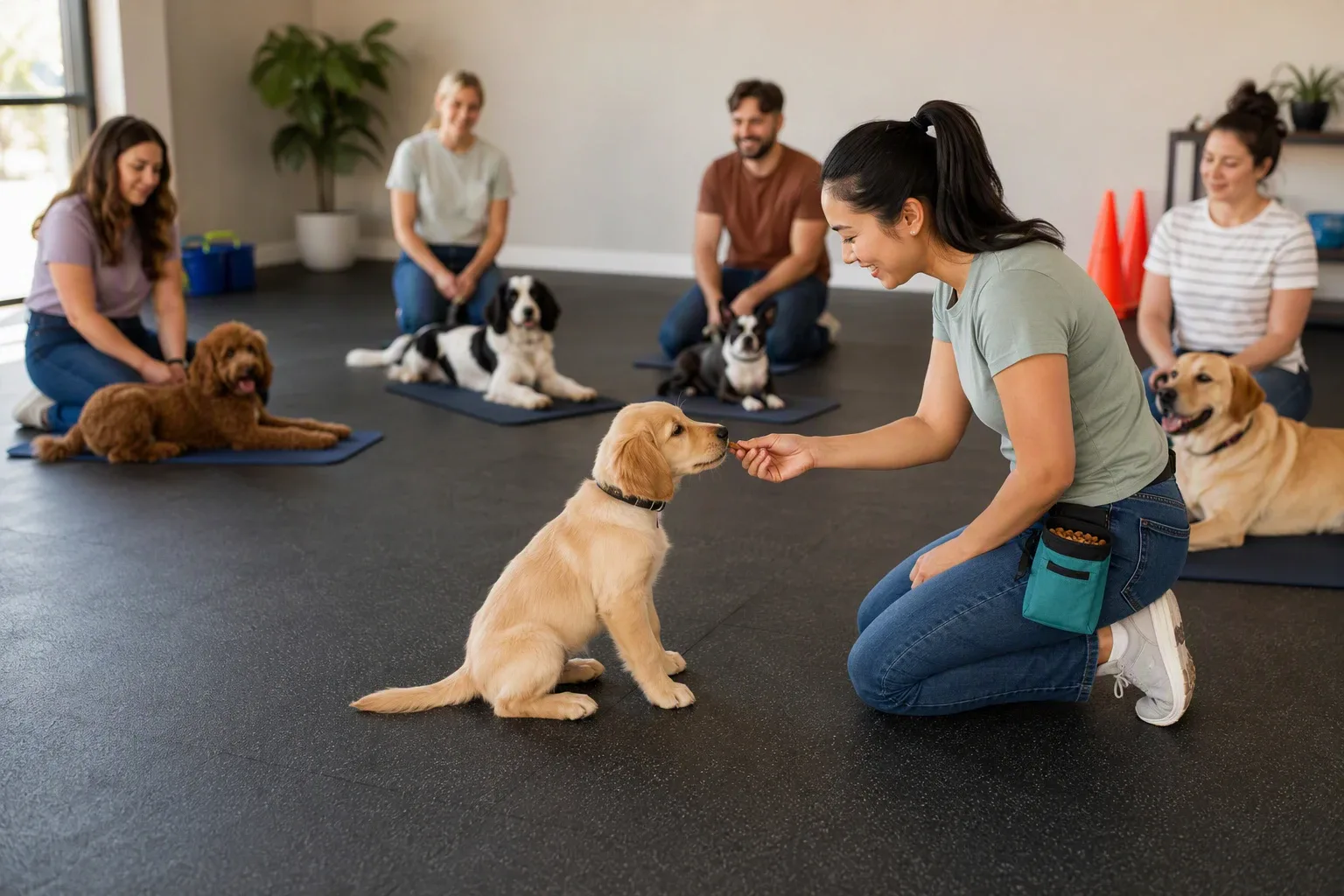
Group classes put several dogs and handlers in one coached session. They fit owners who want lower-cost practice with real-world distractions and better calm behavior around people and dogs.

Key strengths
- Lower per-session cost
- Strong for social proofing
- Good for general manners
Private training
Private training gives you one-on-one coaching built around your dog’s habits, home setup, and pace. It fits owners who need help with behavior issues, faster troubleshooting, or more flexible scheduling.
Key strengths
- High personalization
- Flexible setup
- Strong for owner coaching
Which Format Builds Manners Faster?
Private training usually wins first if your dog keeps failing in daily life. That speed comes from removing friction. You work on door rushing, counter surfing, barking at guests, or leash chaos where it actually happens. Dogs also do not generalize well, so a cue learned in one place may fall apart somewhere else, as AKC explains in its guide to the three Ds of dog training. Private sessions help you:
- cut distractions
- fix one routine at a time
- coach the humans fast
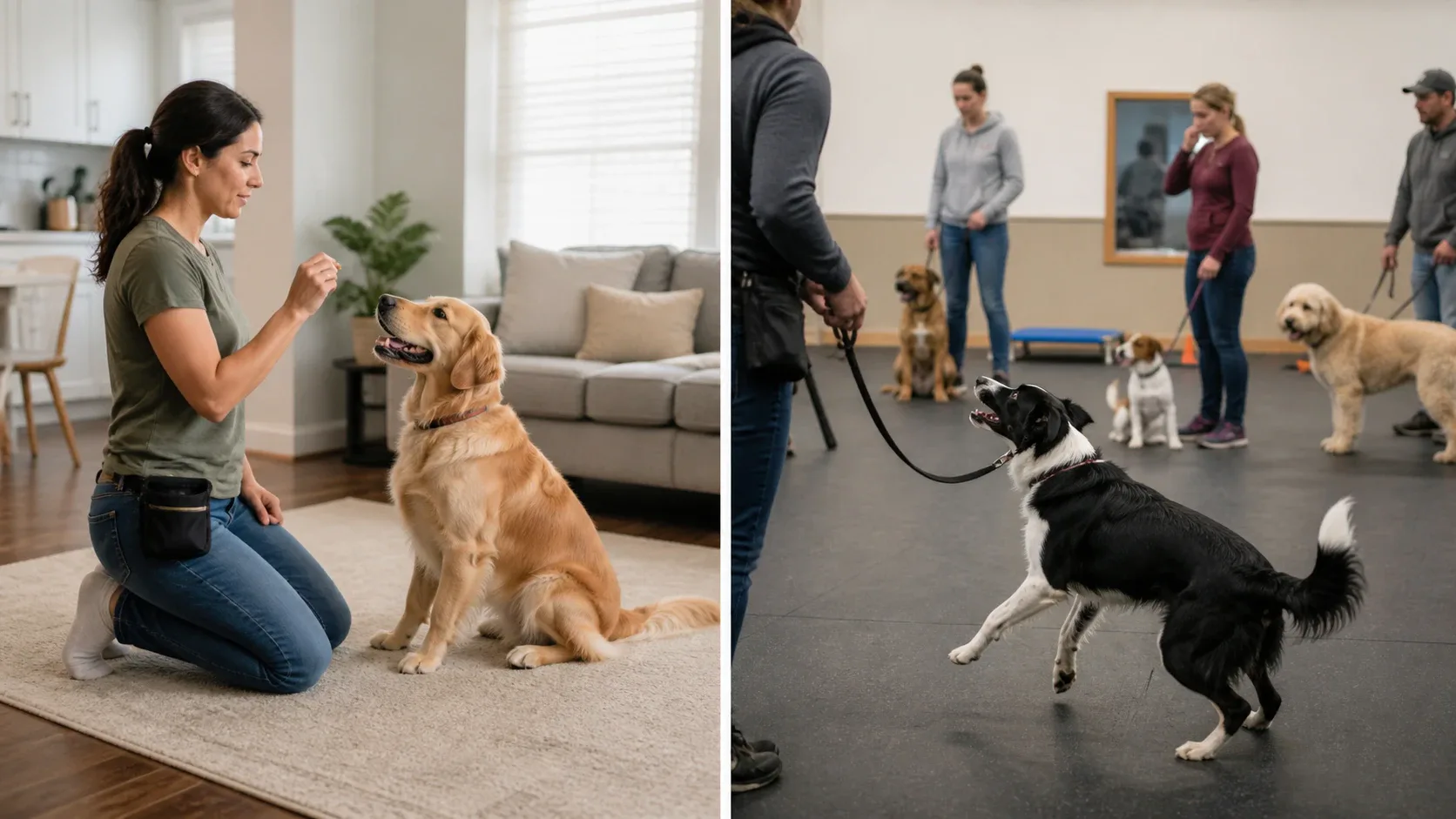
Group classes can build manners faster once the basics exist. Speed here comes from proofing. Your dog learns to sit, settle, greet politely, and stay focused around other dogs, people, and motion. AKC notes that distraction work should build slowly and on purpose in its article on training dogs to ignore distractions. Group work often helps you:
- practice around real temptations
- improve handler timing
- make public manners stick
Fastest path for most dogs: private first, then group.
Also Read: Private Dog Trainer or Group Class: Which Fits Your Dog Best?
Best Fit by Dog Type and Behavior Goal
| Dog type or goal | Best fit | Why |
|---|---|---|
| Puppies and new owners | Group class | Safe social practice and routine building |
| Fear, reactivity, or aggression | Private training first | Fewer triggers and faster behavior planning |
| Dog sports and precision skills | Private, then class | Cleaner reps before proofing around distractions |
For puppies and new pet parents, group class usually wins. AVSAB says the key social window is in the first three months, and puppy classes can start before full vaccination when run safely with positive methods AVSAB puppy socialization guidance.
For dogs with fear, reactivity, or aggression, start private. AVSAB recommends reward-based behavior work and says aversive methods should not be used AVSAB humane dog training statement.
If your dog cannot stay under threshold, class is too soon.
For sport dogs, use private sessions to sharpen mechanics, then add class for distraction proofing.
Also Read: Hands-On Dog Training Obedience Classes: Schedule and Fit
Which Should You Choose for Better Manners?
Pick private training if your dog struggles in real life, not just in class. It fits leash reactivity, jumping on guests, barking at the door, or chaos at home. Since AKC notes good manners include practical skills like calm greetings, loose-leash walking, and handling in the CGC program, private lessons help you fix them where they happen.
Choose group classes if your dog is social, food-motivated, and mostly needs practice around people and dogs. AKC says formal classes can help with socialization and public manners for responsible dog ownership. Group work is often the better pick for polite greetings, focus in distractions, and sport foundations.
Also Read: Obedience Classes and In-Home Training: Benefits and Drawbacks
Need better manners fast? Hands-On Dog Training helps you choose the right path, then build calm, reliable behavior.
Frequently Asked Questions
Q1: Compare group classes and private training.
Group classes build focus around dogs and people. Private training fixes home manners faster. Pick group for social proofing and basics. Pick private for barking, jumping, leash pulling, fear, or busy households.
Q2: Which is better for a reactive dog?
Private training usually wins first. A reactive dog often feels overwhelmed in class and rehearses bad habits. Build calm skills at home, then join a small class later to practice around triggers safely.
Q3: Can puppies start with group classes?
Yes, if the puppy is healthy, food-motivated, and not shut down by new places. Group classes help with handling, focus, and polite greetings. Private sessions help more if nipping, crate issues, or house training are rough.
Conclusion
Choose group classes for safe practice around dogs and people. Choose private training for home-based manners problems. Research shows classes can improve obedience and stranger response PubMed study, while reward-based training remains the safest standard AVSAB guidance.