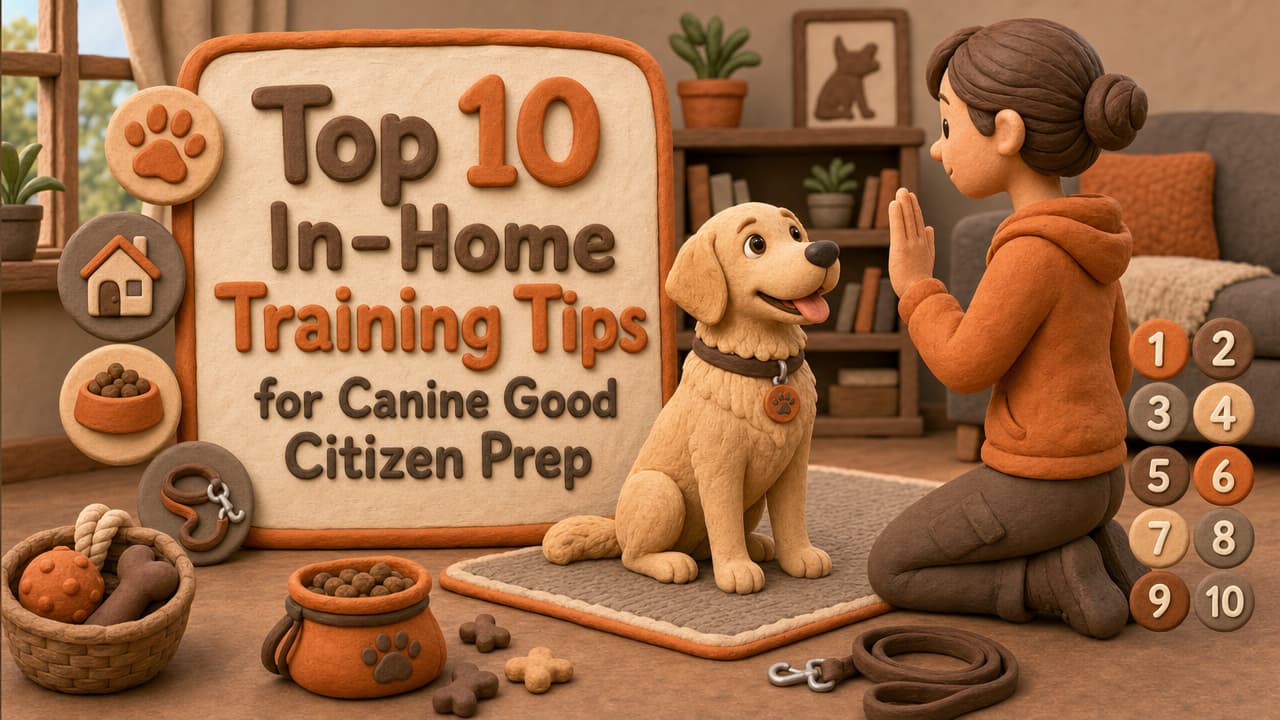
Top 10 In-Home Training Tips for Canine Good Citizen Prep
Quick Summary: The article emphasizes that consistent, short, positive training sessions at home focusing on attention, polite greetings, leash manners, and self-control are key to preparing a dog for the Canine Good Citizen test. Building a calm, focused relationship first makes it easier for dogs to handle distractions and perform well during the test. Tailoring training to your dog’s weak spots and practicing in real-life settings improves reliability.
If your dog stays calm at the door, passes a stranger politely, and holds a stay, you are already partway to Canine Good Citizen readiness. Many dogs show these skills at home, then lose them with handling, light distractions, or new people. This guide ranks the best Dog Training Tips for Canine Good Citizen prep through In Home Dog practice. It follows the Canine Good Citizen test, starting with basics and building toward calm, familiar test-day habits.
At a Glance
| Tip | Best for | Primary skill | Difficulty | At-home payoff |
|---|---|---|---|---|
| Start with calm attention and engagement | Building focus before adding CGC distractions | Attention and engagement | Easy | Better responsiveness during all 10 CGC items |
| Practice polite greetings with friendly strangers | Dogs who jump, bark, or rush people | Neutral stranger greetings | Easy to moderate | Cleaner CGC Test 1 and Test 2 performance |
| Build loose-leash walking in short home sessions | Pullers and dogs who get overexcited outside | Loose-leash walking | Moderate | Stronger control in walking and crowd exercises |
| Train sit, down, and stay with gradual distance | Dogs learning duration and self-control | Sit, down, stay | Moderate | Readiness for Test 6 and test-day focus |
What to know about Canine Good Citizen Prep
Canine Good Citizen, or CGC, is an AKC program that checks 10 everyday skills on a leash. It shows your dog can stay calm, polite, and easy to handle at home and in public.
At-home prep matters because the test is about real-life manners, not perfect drills in a quiet class. Dogs need to respond around doors, guests, movement, and small distractions.
The best prep uses short sessions, positive reinforcement, and slow proofing. > If your dog can do the skill calmly in your home first, you build a much better base for test day.
1. Start with calm attention and engagement
Teach your dog that checking in with you pays first; a ‘Watch Me’ cue can help with focus. Before sit, stay, or leash work, build focus, because AKC notes attention helps with key CGC skills like greetings, walking, other dogs, and distractions in life skills prep.
Highlights
- Mark eye contact with “yes” or a clicker, then pay fast
- Start in quiet rooms, then move outside
- Use a happy voice and high-value treats
- Keep sessions short and easy, as shown in AKC home CGC steps
Specs
- Best for: Building focus before adding CGC distractions
- Primary skill: Attention and engagement
- Difficulty: Easy
Pros
- Fast to start
- Improves every later CGC item
Cons
- Needs proofing in new places
Why it ranks here: attention is the first domino in Canine Good Citizen prep.
Last updated: July 2, 2026
2. Practice polite greetings with friendly strangers
Calm greetings matter because they show your dog can stay relaxed when people approach. In the AKC CGC Test 1, the stranger greets you first and ignores the dog, so rehearse that setup at home with friends and neighbors.

Highlights
- Ask a helper to approach slowly and ignore the dog at first.
- Reward four paws on the floor or a sit.
- Follow AKC’s step-by-step home greeting practice and add new people over time.
Specs
- Best for: Dogs who jump, bark, or rush people
- Primary skill: Neutral stranger greetings
- Difficulty: Easy to moderate
- At-home payoff: Cleaner CGC Test 1 and Test 2 performance
Pros
- Highly relevant to the official test
- Easy to practice with household guests
- Builds confidence and impulse control
Cons
- Excitement can rise quickly if sessions go too fast
- Needs many repetitions with different people
This ranks here because it maps straight to the first CGC item and shapes every public greeting after that.
Last updated: July 2, 2026
3. Build loose-lead walking in short home sessions
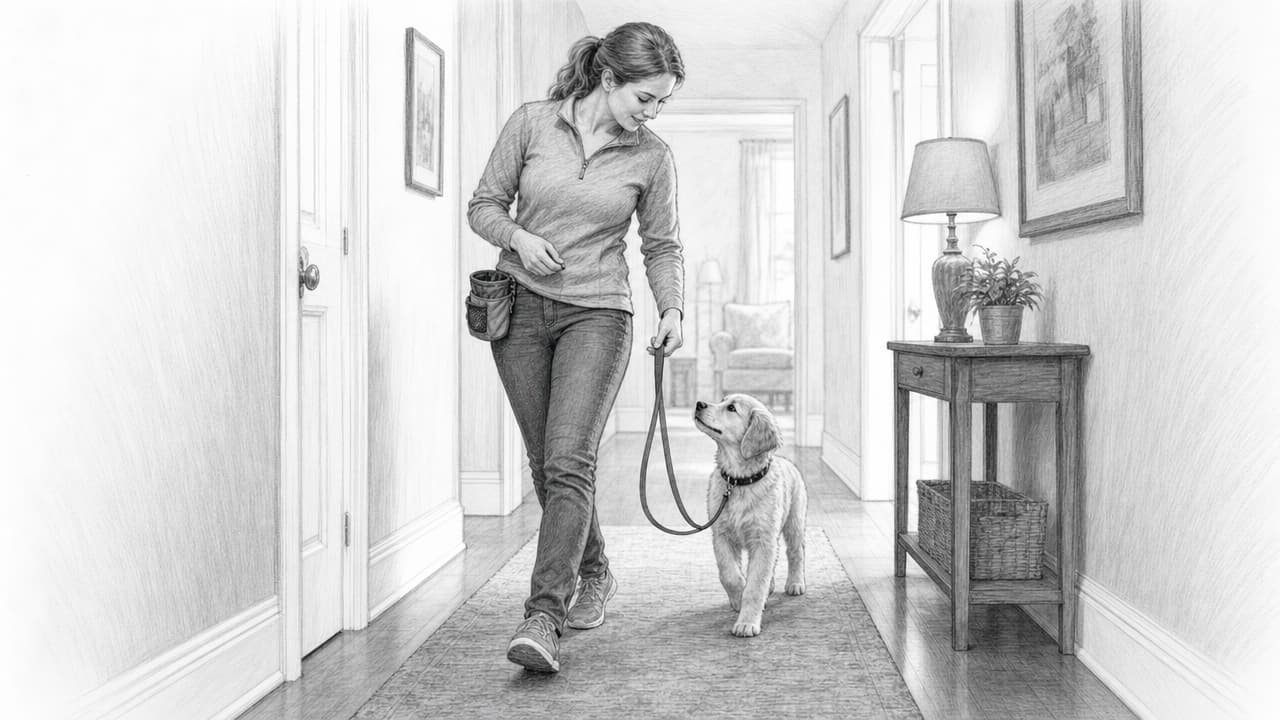
Loose leash walking should become your dog’s normal way to move with you. For CGC, AKC expects a dog to follow turns and stops on a loose lead during both out for a walk and walking through a crowd. Start in a hallway or driveway. Stop the moment the leash tightens, reward slack, turn often, and use a clear release cue.
Highlights
- Start in a hallway, driveway, or quiet yard.
- Reward position and slack leash often.
- Turn often so your dog follows you.
Specs
- Best for: Pullers and overexcited dogs
- Primary skill: Loose-leash walking
- Difficulty: Moderate
Pros
- Supports multiple CGC items
- Easy to practice in short bursts
Cons
- Needs steady handler timing
It ranks high because leash manners affect both walking and crowd work.
Last updated: July 2, 2026
4. Train sit, down, and stay with gradual distance
Dogs often know sit and down, but fall apart on duration and distance. For CGC, Test 6 asks for sit and down on cue, then a stay while you walk away on a 20-foot line and return, according to the AKC CGC test items and AKC home training guide.
Highlights
- Teach each position first, then combine them
- Start with short stays
- Add one step of distance at a time
- Practice a clear release word
Specs
- Best for: Dogs learning duration and self-control
- Primary skill: Sit, down, stay
- Difficulty: Moderate
- At-home payoff: Readiness for Test 6 and better focus
Pros
- Builds control for several test items
- Fits easily into daily home routines
Cons
- Distance is often the hardest part
- Some dogs need very small steps
This ranks here because it shows calm control under direction.
Last updated: July 2, 2026
Honourable Mentions
A few strong runners-up still matter for CGC prep. Keep these in your home routine:
- Proof recall with a high-value come cue
- Desensitize handling and grooming touch
- Add crowd-like movement in hallways or yards
- Practice neutral reactions to other dogs
- Introduce controlled distractions at home
- Rehearse short supervised separations
How to choose the right CGC prep focus
Pick the skill your dog blows first in real life. That is usually the CGC item that needs the most work.
- Start with daily weak spots – pulling at the door, jumping on guests, or melting down on walks.
- If you have a puppy – train attention, handling, and calm greetings first.
- If your dog is older – focus on leash manners, reliability, and quick recovery after distractions.
- Train where errors happen – living room, front door, backyard gate, hallway, or sidewalk.
- Keep sessions short – 3 to 5 minutes works better than long drills.
- Get private help if home triggers stall progress.
Need cleaner CGC practice at home? Get one-on-one help from Hands-On Dog Training for calm, positive in-home prep that builds reliable skills fast.
Frequently Asked Questions
Q1: What are the key at-home training tips to prepare my dog for the Canine Good Citizen test?
Practice short sessions daily. Focus on sit, down, stay, loose-leash walking, recall, polite greetings, and calm handling. Train in different rooms first, then add mild distractions. Reward fast, clear choices so your dog builds steady habits at home.
Q2: How can positive reinforcement improve my dog’s obedience and help pass the CGC certification?
Positive reinforcement makes your dog want to work with you. Use treats, praise, or toys right after correct behavior. This builds trust, lowers stress, and helps your dog repeat clean responses during CGC test items like stays, greetings, and supervised separation.
Q3: What are the top skills dogs need to demonstrate for the AKC Canine Good Citizen test?
Dogs need polite behavior around people and other dogs, basic cues, leash manners, calm grooming and handling, and control in everyday situations. The biggest test skill is consistency. Your dog must stay responsive even when the setting feels new or distracting.