
Dog Training Course Review: Best Leash Training Classes for Dogs
Quick Summary: The most effective leash training classes focus on timing, rewards, and real-world practice, not just basic commands. Owner coaching and practicing around distractions are key to lasting results. Choose a class format that suits your dog’s behavior, whether group, private, or board-and-train, and prioritize positive, humane methods. Consistent practice outside class is essential for successful loose-leash walking.
A class only helps if your dog can leave the lesson and walk a real sidewalk without pulling hard. Many Dog Training Classes look good on paper but fail in daily walks. This review compares Dog Training Classes and Dog Obedience Courses based on real leash results, setup, and fit for new owners. I focus on what works outside class, with practical Leash Training Tips, so you can pick Dog Training Classes that truly improve walks.
What Actually Improves Loose-Leash Walking in Class
The best classes teach timing, rewards, and leash handling, not just “heel.” The American Veterinary Society of Animal Behavior says reward-based training works best and avoids the fallout linked to aversive methods. In practice, that means:
- mark slack leash fast
- reward near your side
- stop before pulling pays off
- add turns, pace changes, and sniff breaks
A class helps most when dogs practice around real distractions, not only in a quiet room.
Owner coaching is the difference-maker. Dogs do not generalize well if the handler changes rules every few steps. AVSAB also notes a good trainer should demonstrate, explain, and give practice time with individual help in class when choosing a trainer. Look for coaches who correct your mechanics:
- treat placement
- leash length
- walking speed
- when to release for sniffing
That is where real walk results come from.
Which Class Format Fits Your Dog Best?
Use the format that matches your dog’s real walk behavior, not your ideal dog. AKC’s Canine Good Citizen test includes loose-leash walking, walking through a crowd, and calm behavior around other dogs, so class setup matters for leash results (AKC CGC skills).
| Format | Best for | Watch out for |
|---|---|---|
| Group class | Social, food-motivated dogs | Over-threshold barking |
| Private lessons | Pulling, lunging, fearful dogs | Higher cost |
| Day training or board-and-train | Busy owners, stalled progress | Needs owner follow-up |
-
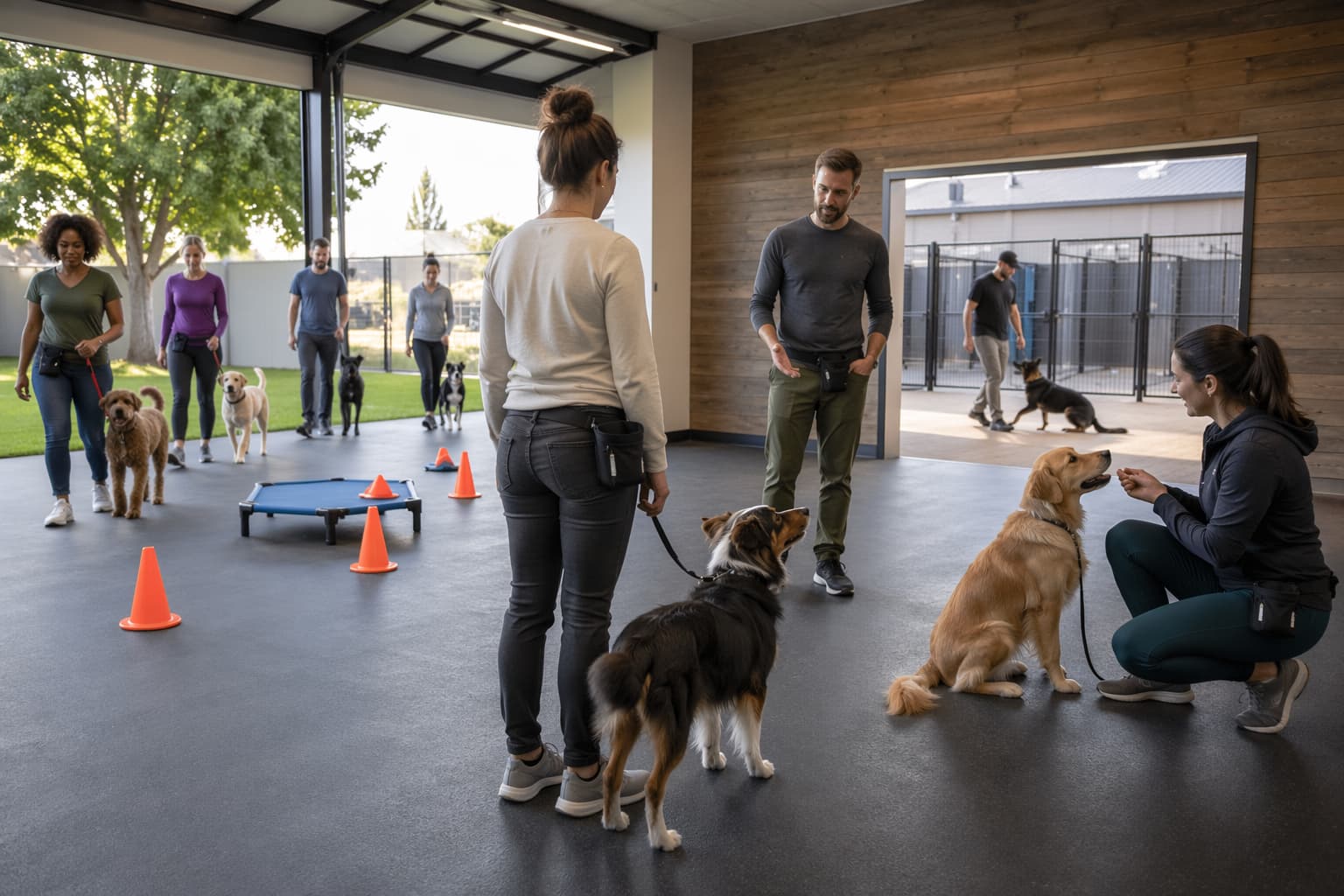
Group classes for social learners
Best for dogs that can notice other dogs without melting down. Animal Humane Society notes group classes add real-world sights, sounds, and practice around distractions, which helps leash skills carry over to daily walks (group class benefits). -
Private lessons for problem pullers
Pick private help if your dog lunges, panics, or drags you. One-on-one coaching lets the trainer adjust distance, rewards, and route fast. Hands-On Dog Training fits well here for Chico and Oroville owners who want in-home leash work. -
Day training and board-and-train options
These can jump-start progress if you lack time or your dog needs more reps. Still, they work best when you get transfer sessions. If you do not learn the leash handling too, the pulling often comes back.
If your dog barks or explodes around other dogs, skip a standard group class first.
Pros and Cons of Leash Training Classes
Pros that actually matter on walks
- Good classes help dogs practice around real distractions, not just in your living room.
- Animal Humane Society notes in-person classes expose dogs to new sights, sounds, people, and dogs, which helps daily-life training stick (class format guide).
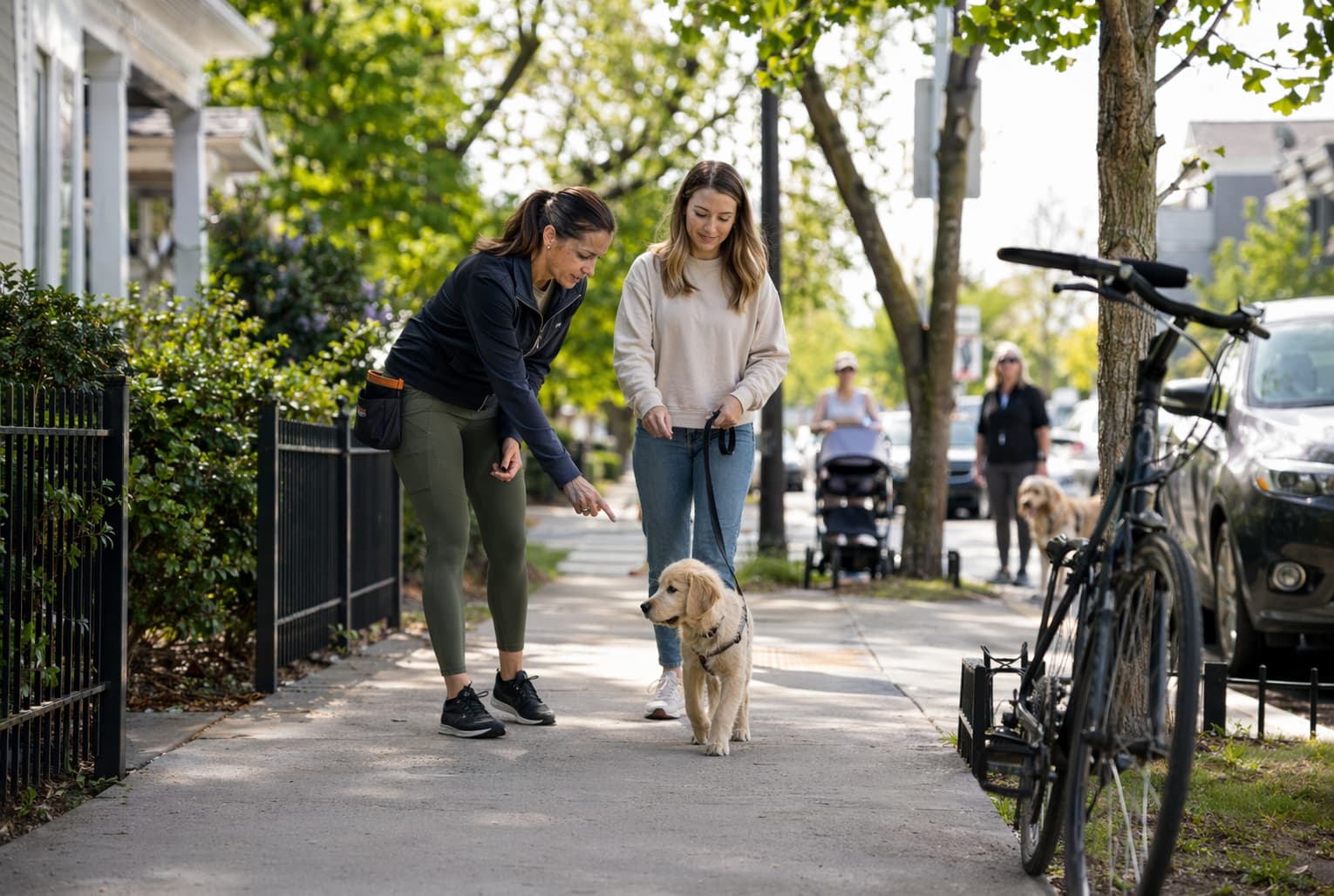
- You also get live coaching on timing, leash handling, and rewards.
Common limitations to watch for
- Group classes can overwhelm shy, reactive, or easily distracted dogs.
- The AVMA says dog social settings can raise disease risk, especially for puppies, so vaccine rules and cleaning standards matter (AVMA guidance).
- Results also depend on your practice between sessions.
Is a Leash Training Class Worth It for Your Dog?
Yes – if walks feel like a tug-of-war, a class can save you time. Loose-leash walking is a trained skill, not something dogs just know, as the AKC explains.
Best fit signals
- Your dog pulls, zigzags, or gets overexcited outside
- You want coaching on timing, rewards, and leash handling
- Your puppy needs safe early practice and social exposure
- You need a plan you will actually follow each week
Reward-based classes are the safest bet. AVSAB says reward-based training should be used for all dog training.
When to choose a different approach
- Pick private training if your dog shows fear, reactivity, or panic on walks.
- Start at home if your dog cannot focus around other dogs.
- Skip class for now if your schedule will break practice.

Need real leash-walking help in Chico or Oroville? Hands-On Dog Training offers positive, local classes and in-home support. Book your next step today.
Frequently Asked Questions
Q1: What are the most effective leash training techniques for dogs?
Use loose-leash walking, fast rewards, short sessions, and clear direction changes. Stop when pulling starts. Reward by your side. Practice first in quiet spots, then busier streets.
Q2: How do positive reinforcement methods improve leash training outcomes?
They help dogs link the leash with calm, good choices. That lowers stress and speeds learning. Dogs usually pull less and recover faster from distractions.
Q3: What should pet owners in California look for in a leash training class?
Check for small class size, real walking practice, humane methods, and help with public distractions. Local owners should also want trainers who understand parks, heat, and busy sidewalks.
Conclusion
The best leash class is the one that changes real walks. Look for positive methods, clear leash-handling practice, and formats you can keep up with. As San Diego Humane Society notes, loose-leash skills take patience, and VCA stresses the right equipment matters.