7 Calming Exercises for CGC Test Day Success
Quick Summary: Calming exercises help dogs stay relaxed during the CGC test, especially when stress affects their behavior. Techniques like leash resets, mat settling, parallel walking, and controlled breathing prepare dogs for test day. Choosing the right exercise depends on the dog’s main stressor, and positive reinforcement is key. Hands-On Dog Training offers tailored, stress-free prep for better test performance.
If your dog nails the skills at home but gets jumpy, sticky, or scattered when the evaluator shows up, the issue is often arousal, not training. Many dogs miss CGC parts because stress changes how they greet, walk, wait, and settle. This CGC Test Preparation guide uses seven Dog Calm Exercises built for CGC Test Preparation. They support Stress Relief Dogs need most, using positive methods that help your dog relax, recover fast, and stay responsive for real CGC Test Preparation.
Quick Comparison
| Exercise | Best for | Setup difficulty | When to use | CGC skill support |
|---|---|---|---|---|
| Hands-On Dog Training | Local hands-on CGC prep and calmer reward-based training | Low to moderate | During the weeks leading up to the test | Loose leash walking, polite greetings, distraction tolerance |
| Centering breath and leash reset | Dogs that pick up on handler stress | Very low | Before entering the test or between stations | All skills, especially calm focus and loose leash work |
| Mat settle with rewards | Dogs that need help settling in unfamiliar places | Low | At the venue, during rest breaks, and while waiting to test | Supervised separation, stay, public composure |
| Parallel walking with distance | Dogs that get excited or worried around people and dogs | Moderate | During outdoor practice and pre-test proofing | Walking through a crowd, reaction to another dog, loose leash |
What to know about CGC Test Preparation
CGC test prep is not just about sits, stays, and loose-leash walking. Your dog also needs to stay calm when a stranger approaches, another dog passes, or you step away for a short time.
That matters because many dogs can do the skills at home, then fall apart in a busy test setting. Calming exercises help your dog stay steady enough to show the polite behavior they already know.
A calm dog can think. A stressed dog reacts first.
1. Hands-On Dog Training
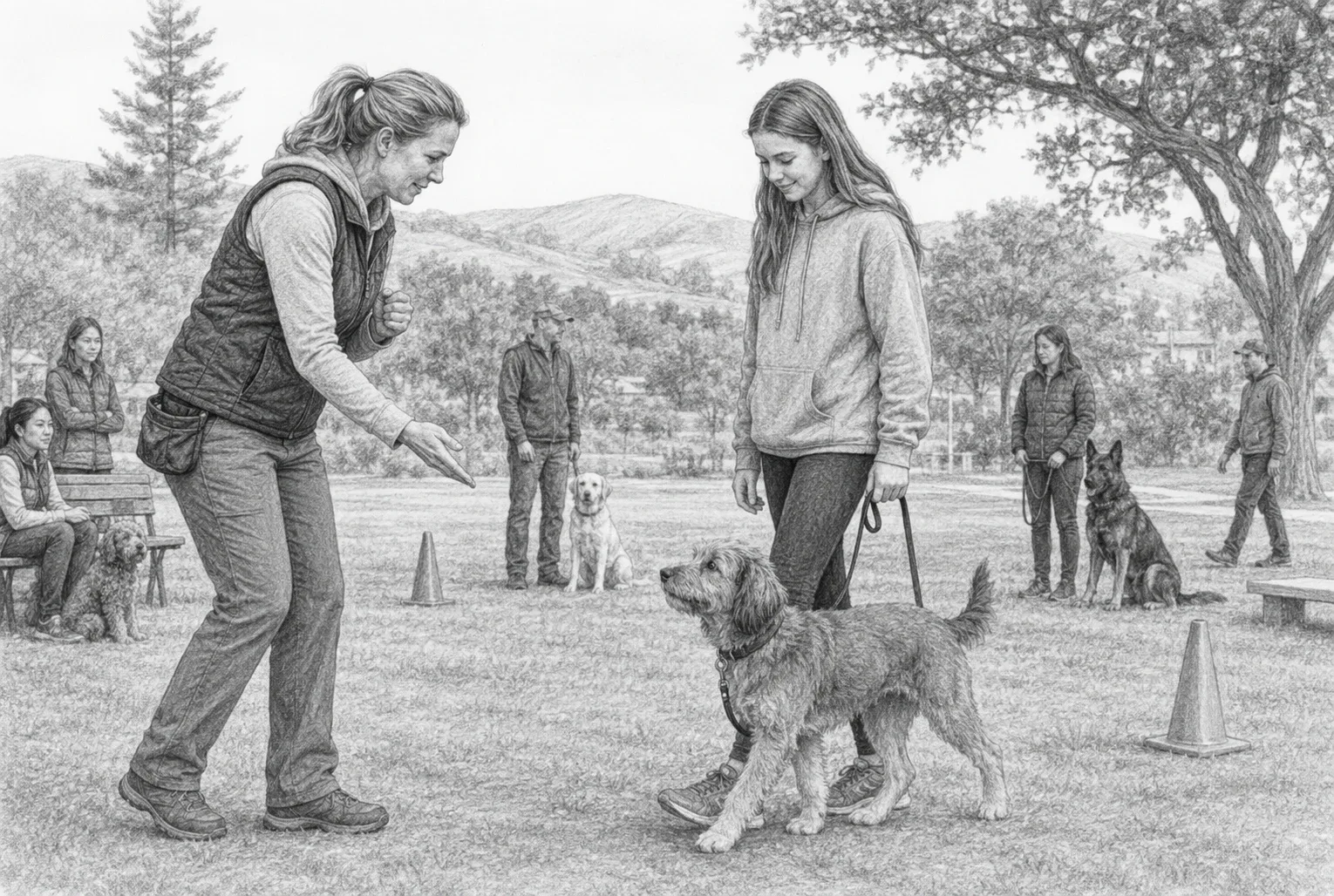
Hands-On Dog Training gives local, positive-reinforcement help for calmer CGC practice. It fits dogs who need guided test prep for loose-leash walking, polite greetings, and distraction work, all core CGC test items. Their low-stress style also matches AVSAB guidance that reward-based methods are the best choice.
Highlights
- Positive-reinforcement CGC prep
- Calm class setting for confidence building
Specs
- Best for: Local hands-on CGC prep
- When to use: Weeks before test day
Last updated: July 21, 2026
Also Read: https://handsondogtraining.com/loose-leash-walking-enjoying-stress-free-walks-in-oroville
2. Centering breath and leash reset
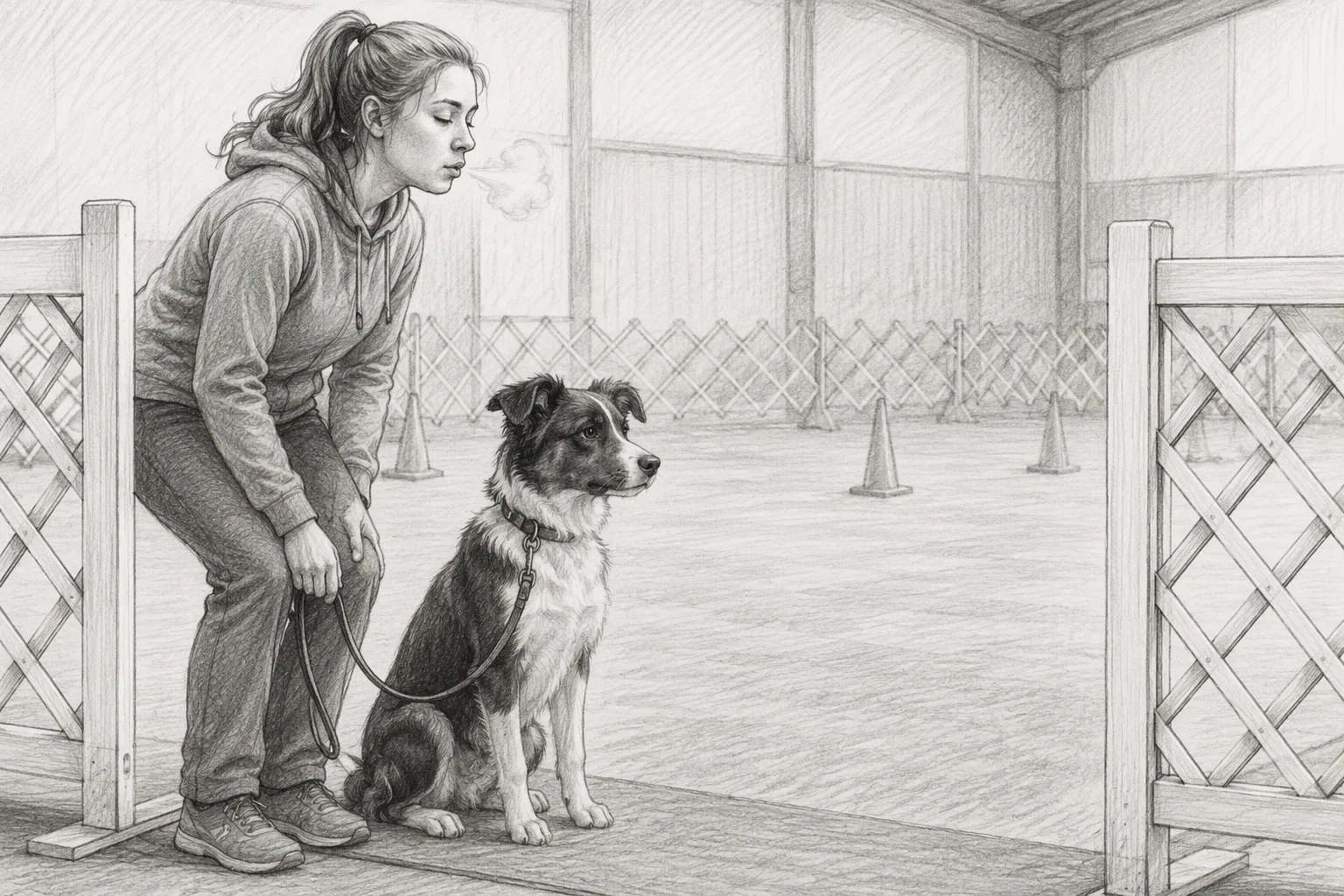
This quick pre-entry routine settles both ends of the leash. Take two slow breaths, drop your shoulders, shorten the pause, then walk in. Research suggests dogs can sync with owner stress over time, and CGC tests reward calm leash control and focus across all 10 items.
Highlights
- Can be practiced anywhere
- Helps dogs that mirror handler tension
- Useful before greetings or station changes
It ranks here because it is simple, fast, and helps the whole team reset.
Last updated: July 21, 2026
Also Read: https://handsondogtraining.com/the-akc-canine-good-citizen-is-your-dog-ready
3. Mat settle with rewards
A mat gives your dog a portable calm station for waiting, watching, and resetting. On CGC day, that clear off-switch helps cut pacing and whining while other dogs work.
Highlights
- Build a reusable calm cue with quiet food delivery on the mat, then grow duration slowly, as shown by VCA’s settle training steps and East Bay SPCA mat work.
Specs
- Best for: Dogs that need help settling in unfamiliar places
Pros
- Portable, measurable, and useful for supervised separation, stay, and public composure. It ranks high because CGC day includes a lot of waiting.
Last updated: July 21, 2026
Also Read: https://handsondogtraining.com/deepening-the-bond-the-power-of-positive-reinforcement
4. Parallel walking with distance
Parallel walking teaches calm movement near distractions without forcing greetings. Start far enough away that your dog can still think, then close the gap slowly. This fits CGC test items like loose-leash walking, crowd work, and reaction to another dog while building focus, much like AKC’s distance-first distraction work.
Highlights
- Reduces pressure around dogs and strangers
- Improves loose-leash focus
- Builds confidence through distance control
Specs
- Best for: Dogs excited or worried around people and dogs
- Setup difficulty: Moderate
- When to use: Outdoor practice and pre-test proofing
- CGC skill support: Walking through a crowd, reaction to another dog, loose leash
Pros
- Builds real-world calmness
- Easy to scale
Cons
- Needs quiet space
- Slow for highly reactive dogs
It ranks here because it targets movement-based overexcitement, a common CGC weak spot.
Last updated: July 21, 2026
Honourable Mentions
These last three are solid backups if your dog needs simpler support on test day.
- 5. Pattern games and food focus drills – Predictable movement helps nervous dogs stay engaged.
- 6. Gentle handling and grooming practice – Builds comfort for the most hands-on CGC item.
- 7. Short visualization and pre-test routine – Gives the handler-dog team a steady final reset.
How to choose the right CGC calming exercise
Pick the exercise that matches your dog’s main test-day issue first.
- Overexcited or handler-sensitive? Start with centering breath and a leash reset. If your dog mirrors your stress, this is the best first step.
- Worried in new places? Use mat settle first, then practice it in parking lots, parks, and class spaces.
- Reactive to dogs? Focus on parallel walking at distance before closing the gap.
- Mentally scattered? Add pattern games as a short warm-up, not your only calming tool.
- Best prep mix: pair one settling exercise, one confidence exercise, and one CGC routine.
For local CGC Test Preparation, Hands-On Dog Training is the strongest pick if you want positive, stress-free coaching tailored to your dog’s exact trigger.
Need calmer test-day reps? Hands-On Dog Training helps Chico and Oroville handlers build CGC-ready focus with positive, low-stress coaching.
Frequently Asked Questions
Q1: What are effective calming exercises to prepare dogs for the CGC test day success?
Practice mat settles, hand targets, slow leash walking, brief sniff breaks, and short greeting reps. Keep sessions under five minutes and end while your dog still feels good.
Q2: How can positive reinforcement training reduce dogs’ test anxiety during the CGC assessment?
Rewards change the dog’s feelings about pressure. Mark calm choices, not just perfect obedience. Pay for eye contact, loose leash steps, and recovery after distractions so your dog learns the test setting predicts good things.
Q3: What are the best mindfulness and relaxation techniques for dogs taking the CGC test in California?
Use pattern games, calm breathing on your side of the leash, and a familiar settle cue. In warm California weather, arrive early, find shade, offer water, and avoid over-arousal before check-in.