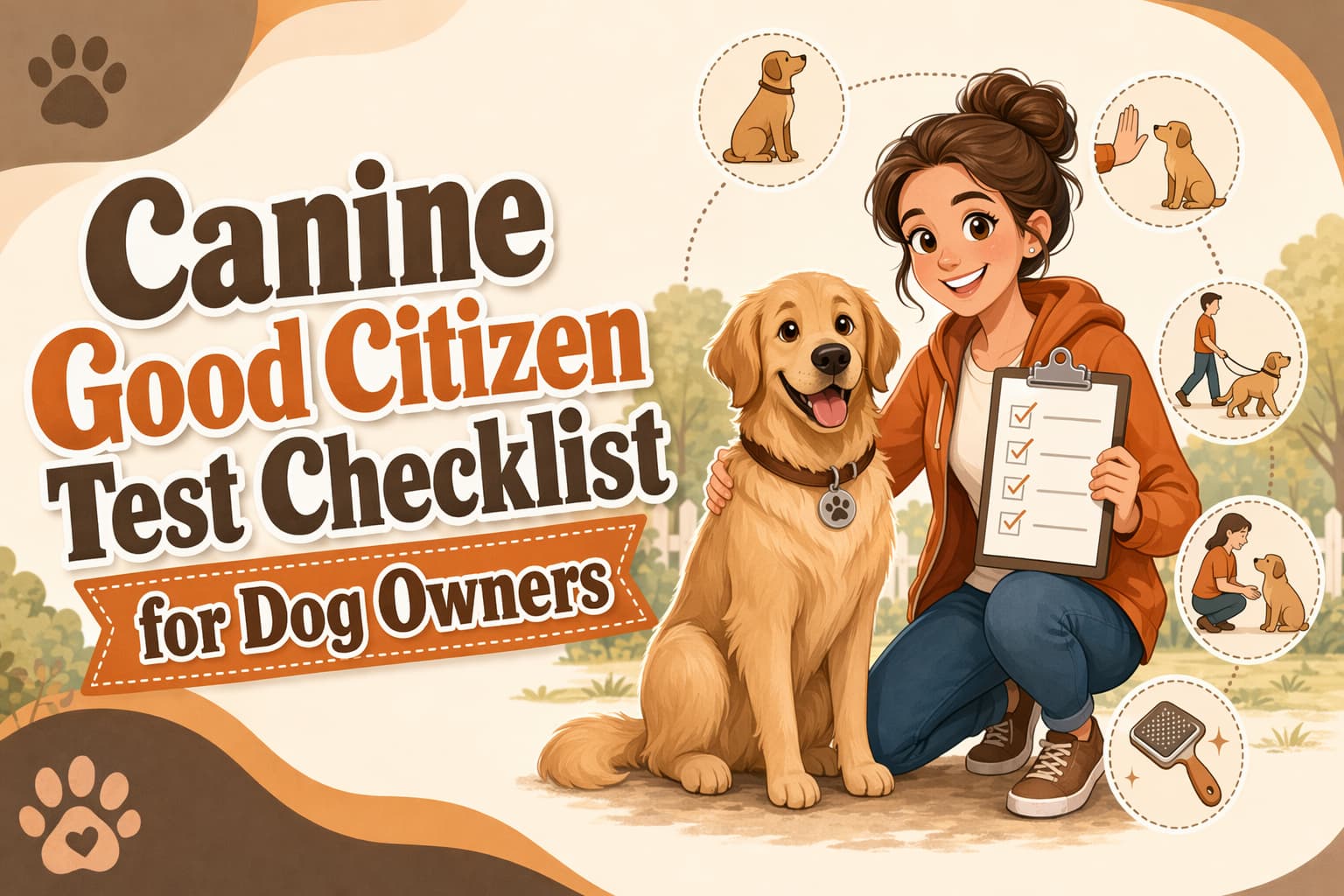
Canine Good Citizen Test Checklist for Dog Owners
Quick Summary: The article provides a straightforward checklist to help dog owners prepare for the Canine Good Citizen test, focusing on practical skills like leash walking, greeting strangers, and handling distractions. It emphasizes training in calm, controlled environments first, then gradually adding real-world elements. Owners should practice each skill regularly, bring the right equipment, and keep test day simple to boost their chances of passing.
If your dog can sit calmly at the vet, pass a barking dog, and ignore a dropped umbrella, you are already preparing for the Canine Obedience Test mindset. Most owners struggle because the official rules feel vague in real life. This guide turns them into a practical Dog Training Checklist, a prep plan, and clear Dog Owner Tips. It is built as a simple Dog Training Checklist first, with a Dog Training Checklist you can actually use before test day.
What the Canine Good Citizen Test Actually Checks
The CGC checks everyday manners, not fancy obedience. AKC says the test covers 10 practical behaviors dogs need to be welcome in the community and pairs them with responsible ownership standards in the official CGC overview.
The 10 skills in plain English
- Stay calm when a stranger walks up
- Sit for petting
- Accept brushing and a quick handling check
- Walk on a loose leash
- Move politely through a small crowd
- Sit, down, and stay
- Come when called
- Ignore another dog
- Handle common distractions
- Stay settled during a short separation

The test rewards control, confidence, and manners, not robot-perfect heeling.
Why responsible ownership is part of the test
AKC includes the owner on purpose. You sign a Responsible Dog Owner’s Pledge covering health, safety, cleanup, exercise, training, and quality of life, as explained in AKC’s CGC test items guide. A dog with skills still needs a handler who uses them responsibly in public.
How the test is usually set up
Most CGC tests are short and in a controlled space with an approved evaluator. AKC says test day generally lasts less than 10 minutes and often happens in a sectioned-off area, pet store, or training ring.
Your Dog Training Checklist for Passing CGC
Use this as a practice map for the 10 CGC skills in the official AKC test items. Train each skill in quiet places first, then add people, dogs, and movement.
-
Greeting strangers and accepting petting
- Teach your dog to stand or sit calmly while a person approaches.
- Reward for soft eyes, four paws on the floor, and no jumping.
- Practice with different adults, hats, voices, and body types.
- If your dog pops up or gets shy, reset and make it easier.
-
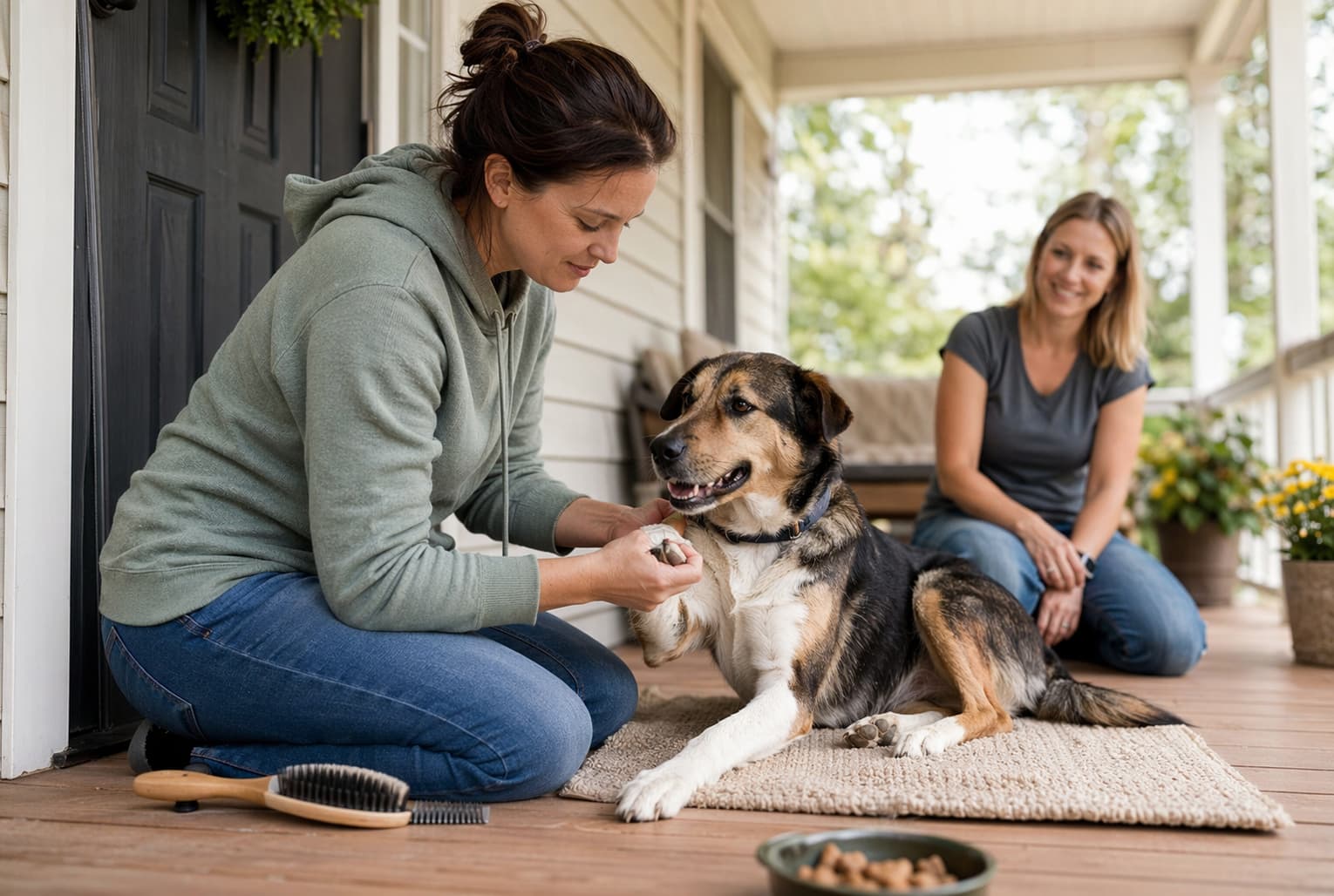
Handling, grooming, and examination
- Get your dog used to ears, paws, chest, and light brushing.
- Pair touch with treats so handling predicts something good.
- Practice brief checks from a friend, not just you.
- Bring the brush or comb your dog knows on test day.
Keep sessions short. Three clean reps beat ten messy ones.
-
Loose-leash walking and crowd manners
- The AKC test includes turns, stops, and walking near at least three people, per the AKC participant guide.
- Reward your dog for checking in with you.
- Stop if the leash tightens.
- Practice past strollers, bags, and slow-moving people without sniffing or pulling.
-
Sit, down, stay, recall, dog-to-dog calm, and separation
- Build a fast sit and down on one cue.
- Add short stays, then distance.
- Practice recalls on a long line.
- Rehearse passing another dog with only casual interest.
- Leave your dog with a trusted person for brief calm separations.
What to Bring and How to Prepare for Test Day
Bring only what helps you stay calm and organized. The AKC says dogs test on leash, and you should bring the brush or comb your dog normally uses for the grooming item, plus an allowed collar such as a buckle or slip collar, per the AKC equipment guide.
- 6-foot leash
- Buckle or slip collar
- Brush or comb
- Water, cleanup bags, paperwork
Skip prong collars, e-collars, and last-minute gear changes. Test day is not the time to try new equipment.
Keep your dog fresh, not tired. Do a short walk, a few easy reps of sit, down, stay, and come, then stop while your dog still feels good. Use calm praise and avoid drilling. If your dog gets amped up in busy places, arrive early and let them settle.
Use the AKC finder to book the right setup. You can take the test with an approved evaluator or at local AKC training clubs, and the test itself usually takes less than 10 minutes in a controlled space, according to AKC’s test-day page.

Need help passing the CGC test? Hands-On Dog Training gives Chico and Oroville owners positive, practical coaching for each checklist skill. Book a class or in-home session and start training with a clear plan.
Frequently Asked Questions
Q1: What are the essential skills required to pass the Canine Good Citizen test?
Your dog must stay polite with strangers, accept handling, walk on a loose leash, sit, down, stay, come when called, stay calm around distractions, and show safe, controlled behavior around other dogs.
Q2: How can dog owners prepare their dogs for the AKC Canine Good Citizen test?
Practice each test item in short sessions, then repeat in busier places. Reward calm choices, clean up leash manners, and rehearse with friendly helpers so your dog learns to work around people, dogs, and light distractions.
Q3: What does the Canine Good Citizen checklist include for dog obedience training?
A solid checklist covers grooming tolerance, friendly greetings, loose-leash walking, basic cues, recalls, supervised separation, and reaction to distractions. It should also track weak spots, practice locations, and whether your dog can perform skills without constant food lures.
Conclusion
Your checklist works best when you train for the 10 CGC skills a little at a time. The AKC says CGC tests practical manners and responsible ownership through 10 official test items.