In-Home Training vs Group Classes: Which Works Faster?
Quick Summary: In-home one-on-one dog training generally leads to faster behavior change because it targets issues where they happen and allows for personalized coaching. Group classes are better for socialization and basic obedience but may slow progress on home-specific problems. Choose in-home training for quick results on household behaviors, and group classes if social exposure is your main goal.
If your dog’s issues show up at the door, on walks, or with guests, one-on-one dog training usually works faster because one-on-one dog training happens where the behavior starts. Many owners compare private lessons and group classes for speed, fit, and routine. This guide uses real training principles to show how one-on-one dog training and classes affect learning, distractions, and owner coaching.
In-Home Training vs Group Classes: At a Glance
| In-home one-on-one dog training | Group classes | |
|---|---|---|
| Learning speed | Usually faster for home-life behaviors | Often slower for individualized behavior change |
| Trainer attention | Full one-on-one focus | Shared across multiple dogs |
| Best for | Puppies, behavior issues, busy households | Basic obedience, manners, social practice |
| Environment | Home, yard, neighborhood | Controlled class setting |
| Socialization value | Low unless added separately | Strong for managed exposure |
| Transfer to home | High because training happens there | Moderate without extra homework |
How In-home one-on-one dog training and Group classes Compare
In-home one-on-one dog training
This is private coaching in your home, yard, or neighborhood. It fits puppies, behavior issues, and busy households that need fast help where problems actually happen.

Group classes
These are shared sessions built for obedience practice, distraction work, and social skills. They fit dogs that need structure, managed exposure, and owners who can keep practicing at home between classes.
Why One-on-One Dog Training Usually Works Faster
Context Matters More Than Classroom Repetition
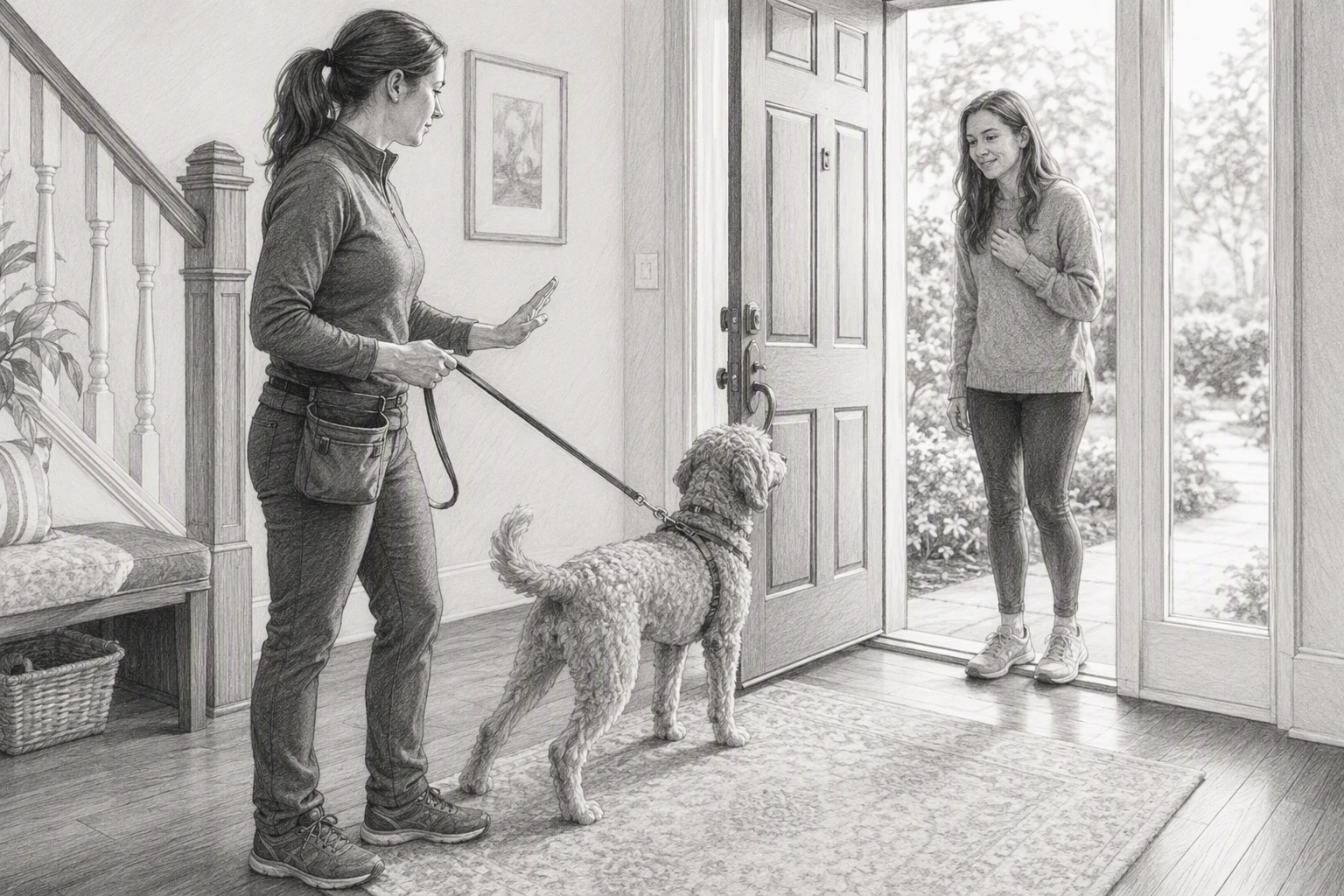
Dogs learn fastest where the problem happens. Jumping at the front door, barking at windows, and leash chaos often start at home, not in class. AVSAB notes that common issues improve with environment management plus reward-based teaching, which fits private sessions well AVSAB humane training statement.
Owner Coaching Speeds Up the Outcome
Private training also fixes the biggest delay: human timing. AVSAB says a good trainer should explain, demo, and adapt methods to the individual dog, while owners practice with guidance AVSAB trainer choice guide. That live coaching cuts mixed signals, so your dog gets the same answer every time.
Also Read: https://handsondogtraining.com/checkout
When Group Classes Can Be the Better Fit
Group classes help fastest when your main goal is safe social exposure, not a deep behavior fix. The AVSAB says puppies can start classes at 7 to 8 weeks with basic vaccine and deworming steps in place, and early social time matters most in the first months AVSAB puppy socialization statement.
They slow down when your dog needs custom timing, home-specific practice, or help with barking, reactivity, or fear. The AVMA also notes group dog settings can raise infectious disease risk, especially for puppies, so setup and screening matter AVMA canine social settings.
Also Read: https://handsondogtraining.com/about
Which Works Faster for Puppies, Reactivity, and Home Manners?
Puppies often learn faster with short in-home sessions. The key window for socialization is the first three months, and positive exposure matters more than sheer volume, according to the AVSAB position statement.
Reactive or anxious dogs usually improve faster at home because they stay under threshold. The AKC notes fear periods and overstimulating places can slow learning or backfire in sensitive dogs during puppy development.
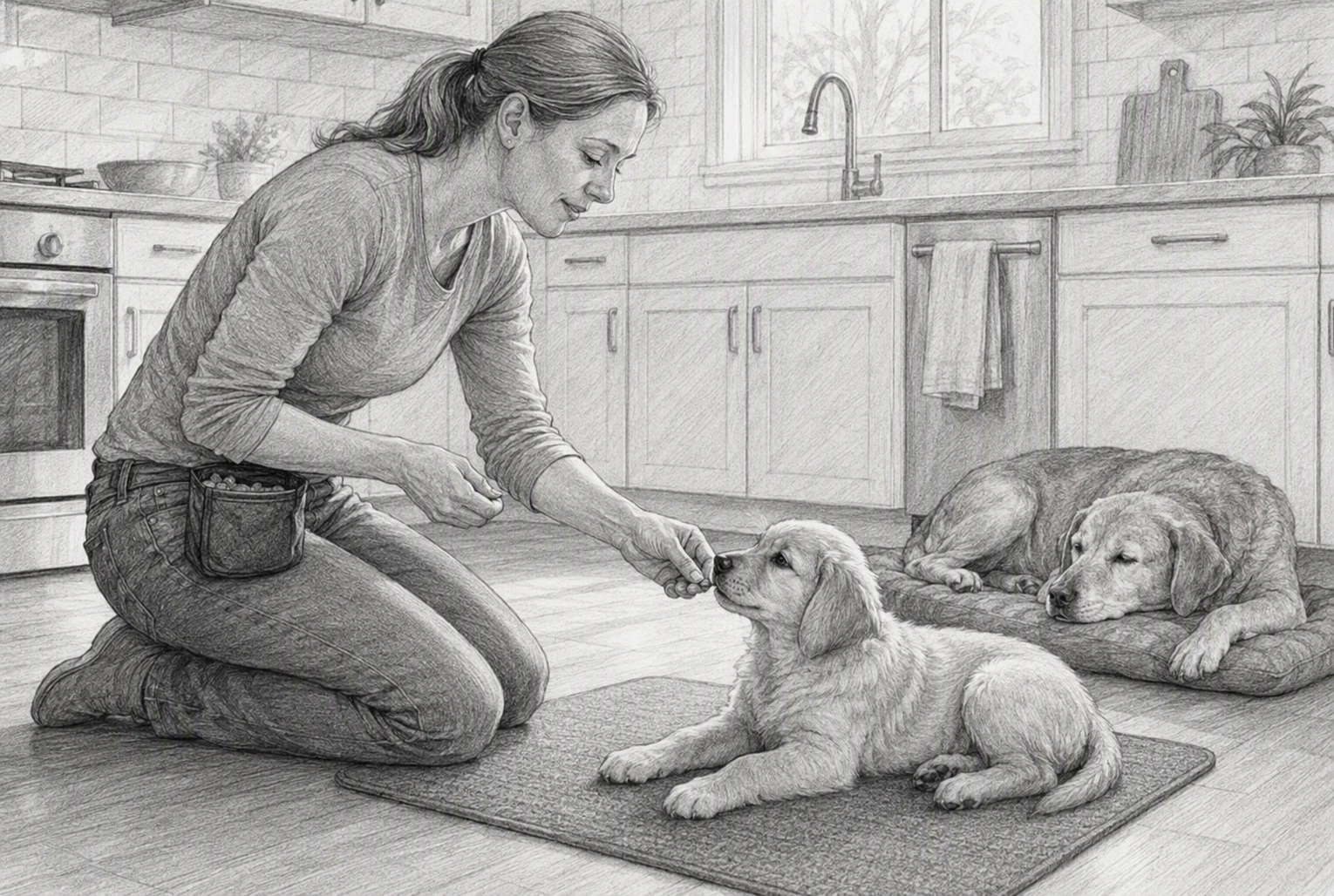
Home manners like counter surfing, barking, and door rushing change fastest where they happen, not later in class.
Also Read: https://handsondogtraining.com/blog
Which Should You Choose for Faster Results?
Choose In-Home Training If You Want Faster Transfer
Pick in-home training if you need behavior to improve where it actually falls apart – your front door, kitchen, leash walk, or couch. Dogs do not generalize well, so skills learned in one place may not show up at home right away. The AKC notes puppies can start training early, and practice in real settings helps daily use stick faster AKC training guidance.
Faster transfer matters more than faster learning on paper.
Choose Group Classes If Social Practice Is the Main Goal
Pick group classes if your main goal is calm exposure around dogs and people. The AVSAB says puppy classes can improve responsiveness and support safe early socialization AVSAB puppy socialization statement. Group work helps with distractions, but home manners may still need extra practice.
Need faster results at home or in class? Start with Hands-On Dog Training for tailored, positive coaching in Chico and Oroville.
Frequently Asked Questions
Q1: Compare in-home training vs group classes.
In-home training usually works faster for leash pulling, barking at home, and door manners. Group classes help more with focus around dogs and people.
Q2: Which is better for a reactive dog?
Reactive dogs often improve faster at home first. You remove pressure, control triggers, and build skills before adding distractions.
Q3: Can I switch from private lessons to group classes?
Yes. That is often the best path. Start private, fix home issues, then join a group to proof skills in busy settings.
Conclusion
In-home training usually works faster for real household problems. Group classes still help puppies socialize, and AVSAB notes they can improve responsiveness safely when well run.