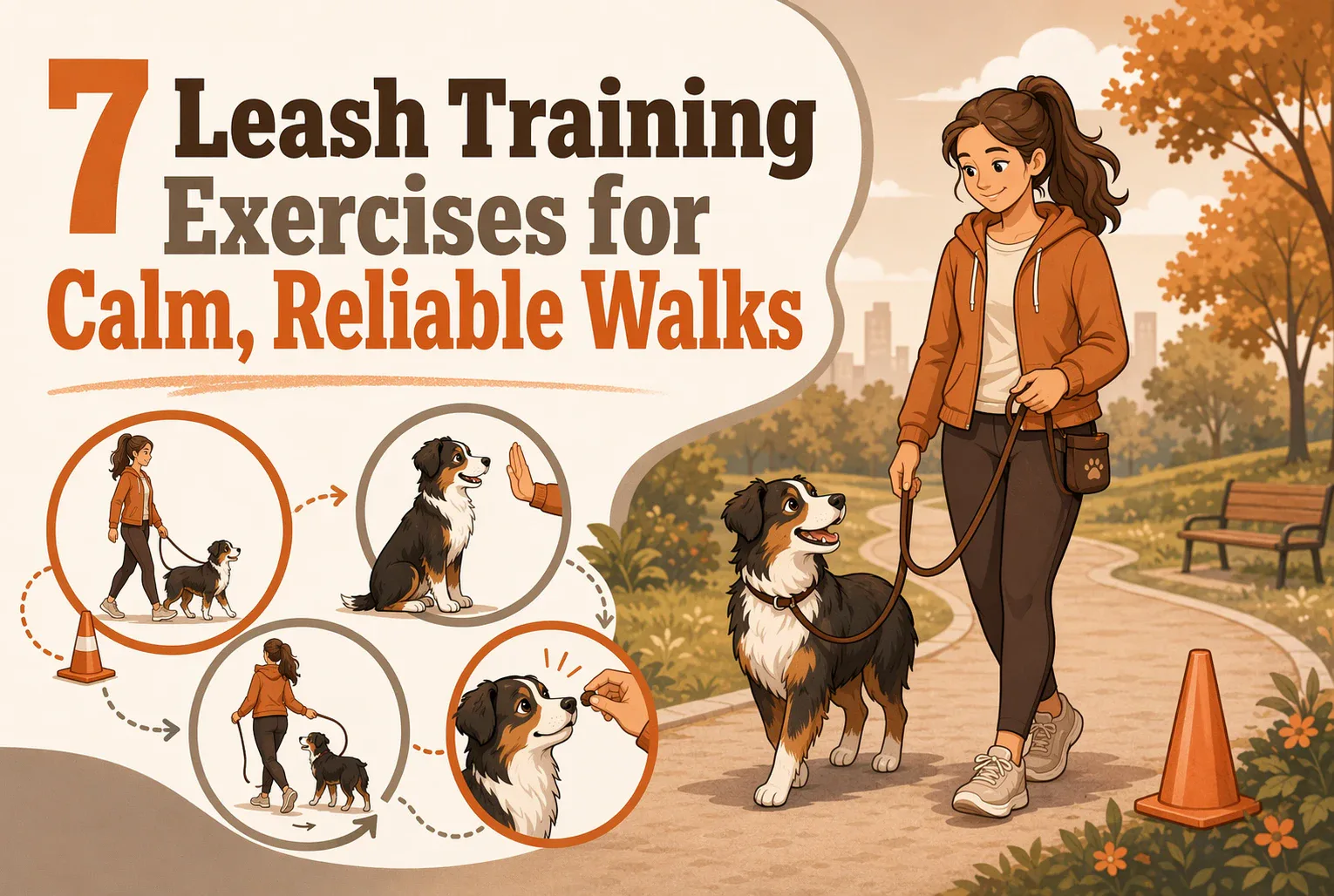
7 Leash Training Exercises for Calm, Reliable Walks
Quick Summary: Effective leash training focuses on building calmness, focus, and self-control before walks. Exercises like hand targeting, leash pressure games, and pattern walking help dogs learn to move with you calmly. Short, repeatable practice in low-distraction settings makes walks more reliable and stress-free. Hands-On Dog Training emphasizes positive, gradual skill-building tailored to each dog’s needs.
If your dog turns walks into a tug-of-war, the fix often starts before you open the door. Many leash issues come from arousal, not just bad manners. Dogs get too excited, worried, or reactive to think once the leash goes on. These Leash Training Exercises build focus and calm in a smart order. We picked Leash Training Exercises that are easy to repeat and reward. Good Dog Leash Training creates Calm Dog Walks by making Leash Training Exercises easier than rushing, freezing, or lunging.
Quick Comparison
| Exercise | Best for | Primary skill built | Difficulty | When to use |
|---|---|---|---|---|
| Hand Targeting at the Door | Pre-walk focus and calm starts | Attention and impulse control | Easy | Before clipping the leash and at walk transitions |
| Leash Pressure Say-Yes Game | Dogs that pull against the leash | Leash awareness and yielding | Easy to moderate | In a quiet, low-distraction space |
| Rewarded Positioning at Your Side | Loose-leash walking foundations | Positioning and reinforcement | Moderate | During short practice walks |
| Pattern Walking with Treat Delivery | Nervous or overstimulated dogs | Rhythm and predictability | Moderate | On short, controlled walks |
What to know about leash training exercises
Leash training is not just about stopping pulling. It teaches your dog how to move with you, handle stress, and make calmer choices on walks.
The best leash training exercises build skill and self-control at the same time. Your dog learns that the leash means clear direction, safe space, and rewards for staying settled.
Short, repeatable practice matters most. Calm dogs do better when the walk feels predictable, not confusing.
1. Hand Targeting at the Door
Hand targeting gives your dog one clear job before the walk starts – touch your hand, earn a reward, repeat. That simple cue can help anxious or overexcited dogs shift into a thinking state, and AKC notes nose targeting can help redirect reactive dogs.
Highlights
- Builds instant engagement before movement starts
- Cuts chaos at the threshold – a key safety spot, since door darting can be dangerous
Specs
- Best for: Pre-walk focus and calm starts
- Difficulty: Easy
It ranks first because calm focus at the door makes every later leash skill easier.
Last updated: July 17, 2026
Also Read: https://handsondogtraining.com/the-akc-canine-good-citizen-is-your-dog-ready
2. Leash Pressure Say-Yes Game
Teach your dog that light leash tension means move with me, not pull harder. Reward the instant your dog softens toward the pressure, which fits reward-based guidance backed by veterinary behaviorists and works best in a quiet space with a well-fitted harness or collar, as the AVMA notes.

Highlights
- Improves response to leash tension
- Helps dogs understand directional feedback
- Supports softer walking mechanics
Specs
- Best for: Dogs that pull against the leash
- Primary skill built: Leash awareness and yielding
- Difficulty: Easy to moderate
- When to use: In a quiet, low-distraction space
- Dog type: Dogs that brace, forge, or surge
Pros
- Teaches clear feedback
- Can reduce pulling habits
- Builds better leash mechanics
Cons
- Requires careful timing
- Too much pressure can overwhelm sensitive dogs
It ranks high because many loose leash walking problems start with pressure confusion, and this game clears that up fast.
Last updated: July 17, 2026
Also Read: https://handsondogtraining.com/deepening-the-bond-the-power-of-positive-reinforcement
3. Rewarded Positioning at Your Side
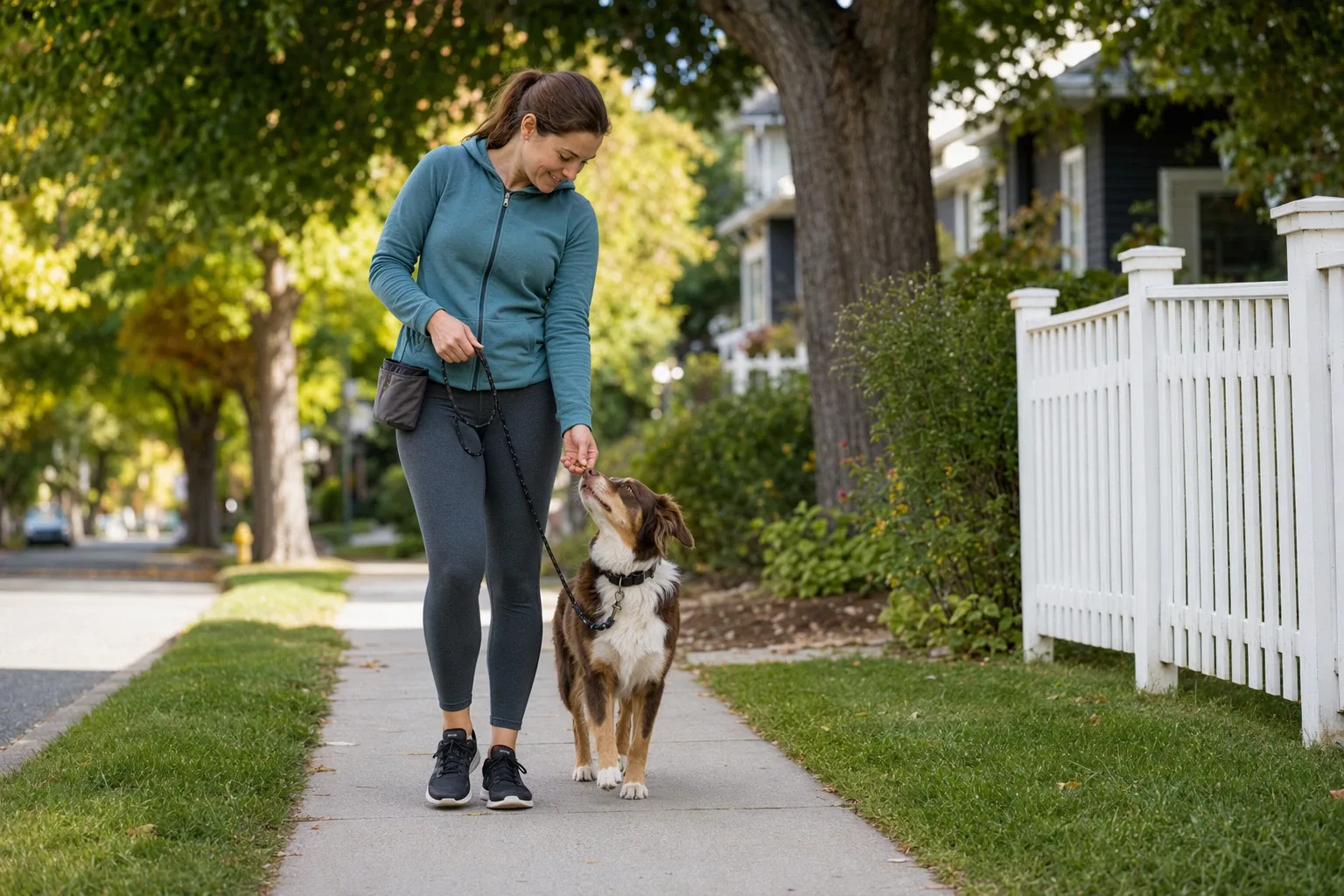
Pay your dog for choosing the spot beside you. This turns calm dog walks into a clear game, not a leash battle. AKC notes dogs learn loose-leash walking when you reward staying near your side (AKC guide).
Highlights
- Reinforces the ideal walking zone
- Makes staying close more rewarding than pulling
Specs
- Best for: Loose-leash walking foundations
- Primary skill built: Positioning and reinforcement
- Difficulty: Moderate
Pros
- Easy to reinforce with treats
- Good for short practice walks, and ASPCApro leash tips support rewarding one consistent side
Cons
- Can become treat-dependent
- Needs consistency across handlers
It ranks here because position work builds reliability after focus and light leash response are in place.
Last updated: July 17, 2026
Also Read: https://handsondogtraining.com/loose-leash-walking-enjoying-stress-free-walks-in-oroville
4. Pattern Walking with Treat Delivery
Pattern walking uses a simple count, steps, and reward rhythm so your dog can predict what happens next. That predictability can lower stress and improve focus, which is why [Leslie McDevitt’s pattern games](
) and VIN’s Walking 1-2-3 guide fit calm dog walks well.
Highlights
- Adds predictability to movement
- Helps dogs settle into a walking rhythm
- Works well for confidence building
Specs
- Best for: Nervous or overstimulated dogs
- Primary skill built: Rhythm and predictability
- Difficulty: Moderate
- When to use: On short, controlled walks
- Dog type: Dogs that lose focus outdoors
Pros
- Reduces uncertainty
- Improves handler communication
- Easy to scale up gradually
Cons
- Can feel artificial if overused
- Needs gradual proofing in new places
It ranks here because structured repetition helps overwhelmed dogs stay calmer on leash.
Last updated: July 17, 2026
Honourable Mentions
These support skills help, but they work best after the core leash exercises above. Think of them as add-ons, not your main walking plan.
- 8. Reinforced Settle on a Mat Before Walks – A solid pre-walk calmness ritual that helps lower arousal, but it is not a primary leash-walking exercise.
How to choose the right leash training exercise
Pick the exercise that solves your dog’s main walk problem first:
- Panic at the door or anxiety – start with calm-building work, then add heel position and mild distractions.
- Pulling – choose focus and stop-start leash exercises.
- Reactivity – start with distance, pattern games, and fast recovery before any close trigger work.
- Keep sessions short, easy, and repeatable so your dog wins often.
- Use the reward your dog cares about most: treats, praise, or play.
- Move on only after success in a quiet place several times in a row.
If you want guided help, Hands-On Dog Training is the best fit for owners who need positive, low-stress coaching tailored to the dog’s exact trigger and skill level.
Need calmer walks and real help? Hands-On Dog Training offers positive, local leash training support for Chico and Oroville dogs and owners.
Frequently Asked Questions
Q1: What are the most effective leash training exercises for calming anxious or reactive dogs?
Use pattern games, leash pressure yield, engage-disengage, and short U-turn drills. Start far from triggers and reward calm check-ins fast.
Q2: How does positive reinforcement improve leash walking for dogs in California training programs?
It pays the dog for loose leash position, calm choices, and focus. That builds trust, lowers stress, and makes walks safer.
Q3: What leash training techniques do California dog trainers recommend for reliable walks?
Most trainers teach stop-and-go, direction changes, mark-and-reward timing, distance from triggers, and gradual exposure. Hands-On Dog Training also favors simple reps in real neighborhoods.