The Science Behind Positive Reinforcement in Dog Training
Table of Contents
- Understanding Operant Conditioning and Animal Learning Science
- Exploring the Four Quadrants of Behavior
- The Impact of Classical Conditioning and the Pavlovian Response
- The Science-Backed Benefits of Reward-Based Training
- The Dangers of Aversive Training Methods and Dominance Theory
- The Vital Role of Puppy Socialization and Development
- Ethics and Welfare in Modern Canine Education
- Understanding Animal Learning Science and Operant Conditioning
- The Four Quadrants of Operant Conditioning
- Classical vs. Operant Conditioning: How Dogs Learn
- The Benefits of Reward-Based Training Techniques
- Socialization and Ethics in Modern Dog Training
- The Four Quadrants of Operant Conditioning
- Why We Choose Positive Reinforcement Over Aversive Training Methods
- The Science of Reward-Based Training and Brain Chemistry
- Building a Stronger Bond Through Positive Consequences
- The Science of Classical vs Operant Conditioning
- The Incredible Benefits of Positive Reinforcement
- Understanding Operant Conditioning and Behavioral Consequences
- The Science of Classical vs. Operant Conditioning
- Socialization and Ethics in Modern Dog Training
- Comparing Training Methodologies and Outcomes
- The Science of Operant Conditioning and Trial and Error Learning
- Classical Conditioning and the Pavlovian Response
- The Four Quadrants of Behavior Modification
- The Dangers of Aversive Training and Dominance Theory
- Puppy Socialization and Critical Development Periods
- Why Science-Based Training Improves Animal Welfare
- The Scientific Pitfalls of Dominance Theory and Aversives
- Understanding the Four Quadrants of Operant Conditioning
- The Impact of Aversive Training Methods on Dog Welfare
- Classical Conditioning and the Pavlovian Response
- Socialization and Early Development Periods
- The Role of Reinforcement Schedules in Dog Obedience
- Socialization during critical development periods
- The Ethics of Animal Learning Science and Modern Welfare
- Moving Beyond Dominance Theory and Aversive Training Methods
- Understanding Operant Conditioning and the Four Quadrants
- The Power of Classical Conditioning and Pavlovian Response
- The Benefits of Reward-Based Training for Long-Term Success
- The Vital Role of Puppy Socialization
- Science-Backed Results at Hands-On Dog Training
- Frequently Asked Questions About Reward Based Training
- Understanding Operant Conditioning and Trial and Error Learning
- The Four Quadrants of Behavior Modification
- Classical Conditioning and the Pavlovian Response
- The Risks of Aversive Methods and Dominance Theory
- Socialization and Critical Development Periods
- Contact Hands-On Dog Training Today
Positive reinforcement is a scientifically validated method that focuses on rewarding desired behaviors to ensure they happen more frequently. By using pleasant consequences like treats and praise, we can build a strong bond with our furry friends while creating a stress-free learning environment for every dog.
At Hands-On Dog Training, we believe that understanding the science of how your dog learns is the first step toward a harmonious home. By focusing on reward-based training, we move away from outdated models and toward a relationship built on mutual trust and clear communication.
Understanding Operant Conditioning and Animal Learning Science
The foundation of modern dog training lies in operant conditioning, a concept popularized by behavioral psychologists. This is essentially trial-and-error learning where a dog associates their actions with specific behavioral consequences.
When your dog performs an action that results in something wonderful, like dog treats or a favorite toy, they are more likely to repeat that action. This process of associative learning allows us to shape dog behavior without the need for fear or force. By using positive reinforcement techniques to motivate and encourage your puppy, we can enhance this learning experience.
Research in animal learning science shows that dogs are constantly evaluating the outcomes of their choices. By ensuring the consequences of behavior are positive, we guide them toward making the right decisions naturally and confidently.
Exploring the Four Quadrants of Behavior
In the world of behavioral science, there are four quadrants used to describe how consequences affect behavior. These include positive reinforcement, positive punishment, negative reinforcement, and negative punishment.
While some traditional methods rely on positive punishment (adding an unpleasant stimulus) or negative reinforcement (removing an unpleasant stimulus), we choose a different path. Our focus remains heavily on reward-based training methods and occasionally negative punishment, such as briefly removing attention when a dog jumps.
By prioritizing pleasant consequences, we avoid the pitfalls of aversive training methods. This approach ensures your dog remains an active, happy participant in the learning process rather than simply trying to avoid a correction.
The Impact of Classical Conditioning and the Pavlovian Response
Beyond intentional actions, we must also consider classical conditioning, famously studied by Ivan Pavlov. This involves an involuntary pavlovian response where a dog learns to associate a neutral stimulus with a meaningful one.
For example, when you grab the leash, your dog might start wagging their tail in anticipation of a walk. We use this type of associative learning to help dogs form positive emotional connections to things they might otherwise find scary, like the vet or loud noises.
By pairing “scary” things with high-value rewards, we change the dog’s internal emotional state. This is a key component of canine behavior modification, ensuring your dog feels safe and relaxed in various environments around Paradise and beyond.
The Science-Backed Benefits of Reward-Based Training
Choosing positive reinforcement dog training is not just about being kind; it is about being effective. Scientific studies consistently demonstrate that dogs trained with rewards learn faster and retain information longer than those trained with aversives.
Using training rewards like praise and play increases the behavior frequency of good dog manners. Furthermore, research indicates that these dogs exhibit significantly lower stress levels and a higher willingness to engage with their owners.
When you use rewards, you are providing essential mental stimulation. This keeps your dog’s brain active and healthy, which is just as important as physical exercise for a well-rounded and happy pet.
The Dangers of Aversive Training Methods and Dominance Theory
For years, many were led to believe in dominance theory, a concept suggesting owners must be the “alpha.” However, modern science, supported by the American Kennel Club and veterinary experts, has debunked this as unnecessary and potentially harmful.
Aversive training methods, such as shock collars or harsh physical corrections, can lead to increased anxiety and aggression. Studies from international researchers show that dogs exposed to these methods have higher cortisol levels, indicating chronic stress.
At Hands-On Dog Training, we avoid these “quick fix” tools that rely on fear. Instead, we focus on building a partnership where your dog wants to listen to you because they find the experience rewarding and safe.
The Vital Role of Puppy Socialization and Development
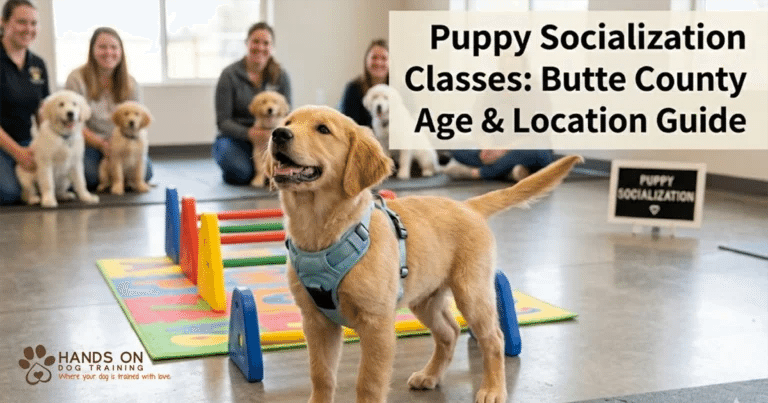
Early puppy socialization is perhaps the most critical period in a dog’s life, occurring between 8 and 20 weeks of age. During this window, positive exposure to new people, sounds, and environments is essential for long-term success.
Using positive reinforcement during this phase helps prevent future dog barking issues or fear-based reactivity. We encourage owners to participate in puppy playgroups to build these vital social skills in a controlled, supportive setting.
Proper socialization leads to a confident, well-adjusted adult dog. By rewarding brave behavior early on, you set the stage for a lifetime of good manners and a peaceful household.
Ethics and Welfare in Modern Canine Education
There is a growing global movement toward improving animal welfare through force-free training techniques. As professional trainers, we recognize that the ethics of how we treat our dogs are just as important as the results we achieve.
Reward-based training respects the dog as a sentient being capable of learning through cooperation. This shift in the industry reflects a deeper understanding of the human-canine bond and the importance of emotional health.
By choosing science-based methods, you are ensuring your dog’s welfare is prioritized. This creates a “paradise of learning” where your dog feels valued, understood, and motivated to be their very best self.
- Discover how positive reinforcement builds lasting trust.
- Learn why science-based methods are more effective than punishment.
- Strengthen your bond through fun and engaging training rewards.
- Prevent behavioral issues with early puppy socialization.
- Support your dog’s mental health with positive learning experiences.
We are here to help you navigate your dog training journey with patience and expertise. Whether you are looking for help with basic dog manners or more complex behavior modification, our team is ready to support you.
Contact Hands-On Dog Training today at (408) 309-8451 to schedule your FREE 30-minute phone consultation. Let us help you and your doggo thrive together in Paradise, CA!
Positive reinforcement is a scientifically validated method that focuses on rewarding desired behaviors to ensure they happen more frequently. By using pleasant consequences like treats and praise, we can build a strong bond with our furry friends while creating a stress-free learning environment for every dog.
Understanding Animal Learning Science and Operant Conditioning
At Hands-On Dog Training, we believe that understanding how your dog thinks is the first step toward a well-behaved companion. The foundation of our work is rooted in operant conditioning, a concept famously developed by B.F. Skinner.
This branch of animal learning science suggests that dog behavior is heavily influenced by the consequences of behavior. When a dog performs an action that results in something wonderful, they are naturally inclined to repeat that action in the future.
This process is often described as trial-and-error learning. Your dog constantly tries different behaviors to see which ones pay off with dog treats, toys, or your affection.
By strategically providing training rewards, we guide them toward the choices we want them to make. This shift from demanding dog obedience to encouraging cooperation makes a world of difference in your training journey.
The Four Quadrants of Operant Conditioning
To truly master reward-based training, it helps to understand the four quadrants of learning. These include positive reinforcement, negative reinforcement, positive punishment, and negative punishment.
In animal learning science, “positive” means adding something, while “negative” means taking something away. We focus on adding pleasant consequences to increase behavior frequency.
Modern research from organizations like the American Kennel Club shows that positive reinforcement is the most effective and ethical way to teach dog manners. It builds a pavlovian response where your dog feels joy when they hear a command.
Conversely, positive punishment involves adding unpleasant consequences, such as a leash pop or a loud scolding. Studies show that aversive training methods can lead to increased stress and fear, which we always strive to avoid.
Classical vs. Operant Conditioning: How Dogs Learn
While operant conditioning involves intentional choices, classical conditioning is about involuntary, associative learning. This was famously demonstrated by Ivan Pavlov and his dogs.
In classical conditioning, a dog learns that one thing predicts another, such as the sound of a Chewy box opening leading to a snack. This creates an automatic emotional response before the dog even acts.
At Hands-On Dog Training, we use both methods to help your dog succeed. We want your dog to have a positive emotional association with training while also making the conscious choice to sit or stay for a reward.
By understanding this science of dog training, you can move away from outdated models like dominance theory. Instead of trying to be an “alpha,” you become a trusted teacher and partner to your furry friend.
The Benefits of Reward-Based Training Techniques
Using positive reinforcement does more than just teach a “sit” or “stay.” It fundamentally changes the relationship between you and your dog by prioritizing animal welfare and trust.
Research indicates that dogs trained with rewards exhibit significantly lower cortisol levels than those trained with positive punishment. A happy dog is a focused dog, making behavior modification much smoother.
- Increased Motivation: Dogs become active participants in the learning process rather than passive followers.
- Stronger Bonds: Trust grows when your dog knows that good things come from working with you.
- Clear Communication: Using a consistent reinforcement schedule tells your dog exactly what they are doing right.
- Reduced Anxiety: Eliminating unpleasant consequences creates a “paradise of learning” where your dog feels safe to fail and try again.
Whether you are working on puppy socialization or fixing dog barking, these training techniques ensure long-term success. We focus on canine behavior modification that treats the root cause of an issue, not just the symptoms.
Socialization and Ethics in Modern Dog Training
The American Kennel Club and other experts emphasize that puppy socialization during the critical window of 8 to 20 weeks is vital. This early exposure to the world prevents future dog behavior issues like fear or aggression.
Ethical dog training means choosing methods that do no harm. While some historical figures like Cesar Millan or The Monks of New Skete used different approaches, modern science has moved toward force-free care.
At our facility in Paradise, CA, we prioritize your dog’s mental health. We believe that dog obedience should never come at the cost of your dog’s spirit or happiness.
Discover how Hands-On Dog Training can transform your relationship with your pet. We invite you to join our community and experience the power of science-based, compassionate education.
Ready to start your journey? Contact us today at (408) 309-8451 to schedule your FREE 30-minute phone consultation. Let’s work together to create a happy, well-mannered companion!
Positive reinforcement is a scientifically validated method that focuses on rewarding desired behaviors to ensure they happen more frequently. By using pleasant consequences like treats and praise, we can build a strong bond with our furry friends while creating a stress-free learning environment for every dog.
The Four Quadrants of Operant Conditioning
To truly appreciate the power of reward-based training, it helps to look at the broader picture of animal learning science. Behavioral psychology categorizes the consequences of behavior into four specific quadrants within the framework of operant conditioning.
While all four quadrants can technically change how an animal acts, they have very different impacts on the emotional well-being of your pet. At Hands-On Dog Training, we prioritize methods that foster trust rather than fear.
Understanding these quadrants allows you to see how your dog engages in trial and error learning to navigate their world. By choosing the right quadrant, you influence your dog behavior without damaging your relationship.
- Positive Reinforcement: Adding a desirable stimulus, such as dog treats or play, immediately after a behavior to increase the behavior frequency.
- Negative Reinforcement: Removing an unpleasant stimulus to increase a behavior, such as releasing pressure on a collar when a dog sits.
- Positive Punishment: Adding an unpleasant consequence, like a physical correction, to decrease the likelihood of a behavior.
- Negative Punishment: Removing something the dog enjoys, like your attention or a toy, to decrease an unwanted behavior like dog barking.
Why We Choose Positive Reinforcement Over Aversive Training Methods
In our dog obedience classes, we focus almost exclusively on the first quadrant. By emphasizing pleasant consequences, we ensure that dog obedience becomes a joyful game rather than a chore rooted in the avoidance of pain.
Scientific research from organizations like the American Kennel Club supports the transition away from dominance theory and aversive training methods. Studies have shown that dogs trained with harsh corrections often exhibit higher cortisol levels and visible stress signals.
By utilizing associative learning, we help your dog make a clear connection between following a command and receiving a high-value reward. This creates a pavlovian response where the dog feels happy and eager to work with you.
The Science of Reward-Based Training and Brain Chemistry
When you use positive reinforcement, your dog’s brain releases dopamine, a neurotransmitter associated with pleasure and motivation. This biological response makes the learning process more efficient and memorable for your furry friend.
Unlike traditional methods used by figures like Cesar Millan or the historical techniques of The Monks of New Skete, modern science emphasizes the “force-free” approach. This ensures the dog is an active participant in their own education.
Whether you are working on puppy socialization or advanced dog manners, using a consistent reinforcement schedule is key. This helps the dog understand exactly which behaviors earn them the rewards they crave, from kibble to a favorite ball from Chewy.
Building a Stronger Bond Through Positive Consequences
Choosing reward-based training is about more than just teaching a sit or a stay. It is about canine behavior modification that respects the animal’s welfare and emotional state.
When you avoid positive punishment, you remove the risk of your dog associating you with unpleasant consequences. This leads to a more confident pet who is willing to try new things without the fear of making a mistake.
At Hands-On Dog Training, we want to help you turn every training session into a bonding experience. By focusing on what your dog does right, you create a “paradise of learning” that lasts a lifetime.
If you are ready to see the difference that science-based training can make, we are here to help. We invite you to reach out to us at Hands-On Dog Training in Paradise, California, to discuss your goals.
Discover how we can support you and your dog by calling (408) 309-8451 for a FREE 30-minute phone consultation. Let’s work together to bring out the very best in your canine companion!
Positive reinforcement is a scientifically validated method that focuses on rewarding desired behaviors to ensure they happen more frequently. By using pleasant consequences like treats and praise, we can build a strong bond with our furry friends while creating a stress-free learning environment for every dog.
The Science of Classical vs Operant Conditioning
You might be familiar with the groundbreaking work of Ivan Pavlov and his famous experiments regarding classical conditioning. This is often referred to as a pavlovian response, where a dog learns to associate a neutral stimulus with an involuntary reflex or emotional state.
For example, if you always grab the leash before a walk, your dog might start wagging their tail the moment you touch the hook. This associative learning happens automatically, forming a deep emotional connection between an object and a feeling of excitement or safety.
While classical conditioning deals with these involuntary feelings, operant conditioning focuses on intentional, goal directed actions. At Hands-On Dog Training, we view this as trial and error learning where your dog discovers that their choices lead to specific behavioral consequences.
When your dog sits and receives dog treats, they are learning through animal learning science that the action of sitting produces a pleasant consequence. This increases the behavior frequency, making it much more likely they will choose to sit again in the future without being forced.
We use both of these scientific pillars to your advantage in our dog obedience programs. We want your dog to feel a happy pavlovian response when they see their training pouch and then use operant conditioning to choose polite dog manners when meeting new people.
This dual approach creates a comprehensive behavior modification strategy that sticks because it addresses both the dogs mind and heart. By focusing on reward based training, we avoid the unpleasant consequences associated with aversive training methods that can damage your bond.
According to resources like the American Kennel Club, understanding these consequences of behavior is the fastest way to a well adjusted pet. We help you move away from outdated dominance theory and instead embrace a reinforcement schedule that makes learning fun for everyone involved.
Our training techniques are designed to be clear and consistent, ensuring your dog understands exactly what is expected. Whether you are working on puppy socialization or fixing dog barking, the science remains the same: rewarded behavior is repeated behavior.
Discover how we can help you apply these principles by visiting us at 5905 Clark Road, Unit B, Paradise, CA 95969. We are dedicated to providing the best dog obedience classes in the area to help you and your dog thrive together.
Ready to start your journey with a science based approach? Contact Hands-On Dog Training today at (408) 309-8451 for your FREE 30 minute phone consultation.
The Science Behind Positive Reinforcement in Dog Training involves rewarding your dog for good behavior to create a lasting, joyful bond. By focusing on pleasant consequences rather than fear, we use proven behavioral science to help your furry friend learn faster and feel more confident in any environment.
The Incredible Benefits of Positive Reinforcement
Choosing reward-based training is about more than just being nice to your dog. It is about maximizing efficiency and ensuring long-term success through the lens of animal learning science.
Research consistently shows that dogs trained with rewards learn faster and retain their skills longer than those trained with aversive methods. When your dog is excited about training rewards like dog treats, their brain enters an optimal state for absorbing new information.
Modern research indicates that dogs trained with positive methods exhibit significantly lower stress levels and a higher willingness to participate in new tasks compared to those trained with force. This scientific approach to dog behavior ensures your pet remains an active participant in the learning process.
By focusing on dog manners through rewards, you are building a relationship based on trust. Your dog looks to you for guidance because they want to, not because they are afraid of unpleasant consequences or positive punishment.
Understanding Operant Conditioning and Behavioral Consequences
At the heart of our methods is operant conditioning, a form of trial-and-error learning. This process involves your dog associating their own behavior frequency with specific consequences of behavior.
When your dog sits and receives a treat, they experience positive reinforcement. This associative learning makes them much more likely to repeat that sit in the future because the outcome was favorable.
In behavior modification, we focus on the four quadrants of learning, but we prioritize the most ethical ones. We emphasize positive reinforcement and negative punishment, such as briefly removing your attention when a dog jumps, to guide them toward better choices.
This scientific framework is supported by the American Kennel Club and other leading veterinary organizations. It moves away from outdated dominance theory and focuses on how dogs actually process information and rewards.
The Science of Classical vs. Operant Conditioning
While operant conditioning deals with intentional actions, classical conditioning focuses on involuntary, pavlovian response patterns. You might be familiar with the work of Ivan Pavlov, who taught dogs to salivate at the sound of a bell.
In our dog obedience classes, we use these principles to change how your dog feels about certain triggers. By pairing a scary sound with a high-value reward, we create a new emotional association through associative learning.
Understanding the difference between these two is vital for effective dog training. One builds physical skills through trial-and-error learning, while the other addresses the underlying emotional state of your dog.
Socialization and Ethics in Modern Dog Training
Puppy socialization is a critical component of behavior modification that must happen during early development windows. Exposing your pup to new stimuli using pleasant consequences prevents future anxiety and dog barking issues.
There is a growing global concern regarding the ethics of aversive training methods. Research from experts has shown that unpleasant consequences like shock collars can lead to increased cortisol and long-term stress signals.
We believe in force-free dog training because it improves animal welfare and strengthens the trainer-dog relationship. Science proves that a happy dog is a better learner, making reward-based training the gold standard for modern families.
Whether you are working toward Canine Good Citizen status or just want better dog manners, a consistent reinforcement schedule is key. Using mental stimulation and clear communication helps your dog thrive without the need for conflict.
Discover how we can help you and your furry friend achieve your goals together. We invite you to contact us at Hands-On Dog Training for a FREE 30-minute phone consultation to discuss your dog’s needs.
Contact Gloria Post at (408) 309-8451 or visit us at 5905 Clark Road, Unit B, Paradise, CA 95969. We look forward to helping you build a better bond with your dog!
Positive reinforcement dog training is a scientifically proven method that uses rewards to encourage desired behaviors, creating a joyful and lasting bond between you and your dog. By focusing on pleasant consequences rather than fear or intimidation, we utilize animal learning science to help your furry friend learn faster and feel more confident in any environment.
Comparing Training Methodologies and Outcomes
When you choose a training style, you are choosing the emotional future of your dog. Modern animal learning science categorizes training into four quadrants of operant conditioning, but not all quadrants are created equal for your doggo’s well-being.
We focus on reward-based training because it prioritizes positive reinforcement and negative punishment (simply removing a reward). This approach ensures your dog stays motivated and eager to learn without the risk of unpleasant consequences.
| Methodology | Primary Tool | Emotional Impact | Long-Term Result |
|---|---|---|---|
| Positive Reinforcement | Training Rewards/Praise | High Confidence | Strong Bond & Reliability |
| Aversive Training Methods | Corrections/Fear | Increased Anxiety | Potential Aggression |
| Dominance Theory | Physical Force | Suppressed Behavior | Breakdown of Trust |
The Science of Operant Conditioning and Trial and Error Learning
At its core, operant conditioning is a form of trial-and-error learning. Your dog performs an action, and the behavioral consequences determine if they will do it again.
When we use dog treats and high-value training rewards, we increase the behavior frequency of good manners. This scientific process helps your dog associate their choices with pleasant consequences, making them active participants in their own education.
Conversely, positive punishment involves adding a stimulus the dog finds painful or scary. Research from the American Kennel Club and various veterinary journals shows that these aversive training methods often lead to dog barking, lunging, and other stress-related behaviors.
Classical Conditioning and the Pavlovian Response
While operant conditioning deals with intentional choices, classical conditioning is all about involuntary emotional responses. This is often called a Pavlovian response, named after the famous scientist Ivan Pavlov.
By consistently pairing a dog obedience cue with a delicious treat, we create an associative learning link. Your dog begins to feel happy the moment they hear the command because they anticipate something wonderful is about to happen.
This internal shift is vital for canine behavior modification. Instead of just stopping a bad habit, we are changing how your dog feels about the world around them, leading to a calmer and more predictable companion.
The Four Quadrants of Behavior Modification
Understanding the four quadrants is essential for any modern pet parent. These include positive reinforcement, negative reinforcement, positive punishment, and negative punishment.
In our dog obedience classes, we emphasize the “positive” side of the scale. While negative reinforcement involves removing something unpleasant to increase a behavior, we find that reward-based training is much more effective for building a trusting relationship.
Focusing on rewards helps avoid the pitfalls seen in older methods, such as those popularized by Cesar Millan or The Monks of New Skete. Modern science favors a gentler, more effective path that respects animal welfare.
The Dangers of Aversive Training and Dominance Theory
For many years, dominance theory suggested that humans must be the alpha to control their pets. However, science now proves that dogs are not trying to rule your household; they are simply doing what works to get what they want.
Using force or unpleasant consequences can cause a dog to shut down. This suppressed behavior might look like “obedience,” but it is actually a state of learned helplessness that can eventually lead to explosive dog behavior issues.
Studies have shown that dogs trained with aversives have higher cortisol levels. By avoiding these harsh training techniques, we ensure your dog remains a happy, healthy member of the Paradise, CA community.
Puppy Socialization and Critical Development Periods
The most important window for your dog’s future is the puppy socialization period, typically between 8 and 20 weeks of age. This is when associative learning is at its most powerful.
During our puppy playgroups, we expose young dogs to new sights and sounds in a controlled, positive way. This prevents fear-based dog barking and reactivity before they even start.
Proper socialization ensures your puppy grows into a confident adult. We use a consistent reinforcement schedule to turn every new experience into a “win” for your growing furry friend.
Why Science-Based Training Improves Animal Welfare
The role of animal learning science in modern training is to provide a blueprint for a better life. When we understand how a dog’s brain works, we can teach dog manners without ever needing to raise our voices.
Behavior modification is most successful when it is fun. Whether we are working on Canine Good Citizen skills or basic dog obedience, the goal is always to provide mental stimulation and clear communication.
Our commitment to force-free methods means we stay updated on the latest research. We believe every dog in Paradise deserves a training experience that is as kind as it is effective.
- Builds a foundation of trust and mutual respect.
- Reduces stress and anxiety for both the owner and the dog.
- Encourages the dog to be a creative problem solver.
- Creates long-lasting results through clear communication.
Discover how Hands-On Dog Training can transform your relationship with your pet. We invite you to join our community of happy dogs and confident owners right here in Paradise, CA.
Contact us today at (408) 309-8451 to schedule your FREE 30-minute phone consultation. Let’s work together to bring out the very best in your furry friend through the power of positive reinforcement!
Positive reinforcement is a scientifically validated method that focuses on rewarding desired behaviors to ensure they happen more frequently. By using pleasant consequences like treats and praise, we can build a strong bond with our furry friends while creating a stress-free learning environment for every dog.
The Scientific Pitfalls of Dominance Theory and Aversives
For many years, outdated models like dominance theory suggested that owners needed to act as the alpha through physical force and intimidation. We now know from modern animal learning science that this approach is fundamentally flawed and often dangerous for the household dynamic.
Using aversive training methods, such as positive punishment, can lead to a shut down dog who obeys out of fear rather than cooperation. While a behavior like dog barking might stop in the moment due to a correction, the underlying emotional stress remains and often resurfaces as severe anxiety.
At Hands-On Dog Training, we recognize that these unpleasant consequences damage the human-canine bond. When a dog is afraid of making a mistake, they stop offering new behaviors, which stifles the trial and error learning necessary for true growth.
Understanding the Four Quadrants of Operant Conditioning
To understand why we prioritize reward-based training, it is helpful to look at the four quadrants of operant conditioning. This scientific framework describes how behavioral consequences influence the future frequency of a dog’s actions.
Positive reinforcement adds a desirable stimulus to increase a behavior, while negative punishment removes something the dog wants to decrease an unwanted action. These two quadrants form the backbone of ethical canine behavior modification strategies used in our Paradise, CA classes.
Conversely, positive punishment and negative reinforcement rely on adding or removing discomfort to influence the dog. Research consistently shows that focusing on the positive quadrants leads to faster learning and a much higher level of animal welfare.
The Impact of Aversive Training Methods on Dog Welfare
Significant scientific studies highlight the physiological toll of harsh training techniques. Dogs trained with aversives show significantly higher cortisol levels, which is a primary biological marker for chronic stress.
These stress signals are not just temporary; they can lead to long-term behavioral issues and a breakdown in trust. In contrast, dogs from positive-only schools exhibit more relaxed body language and a greater willingness to participate in training sessions.
By choosing reward-based training, you are protecting your dog’s mental health and ensuring they remain a confident, happy member of your family. We believe every dog deserves a learning environment free from the threat of pain or fear.
Classical Conditioning and the Pavlovian Response
Beyond intentional actions, we must also consider classical conditioning, famously documented by Ivan Pavlov. This involves involuntary, associative learning where a dog connects a specific stimulus with an emotional or physiological response.
If a dog constantly associates their owner with aversive training methods, they develop a negative Pavlovian response to your presence. We want your doggo to associate you with wonderful things, creating a joyful connection every time you pick up the leash.
By pairing training with dog treats and high-value rewards, we utilize these scientific principles to create a “paradise of learning.” This ensures your dog is not just performing a task, but feeling genuinely good about the work you do together.
Socialization and Early Development Periods
The science of dog behavior emphasizes the importance of puppy socialization during the critical window between 8 and 20 weeks of age. Exposing your puppy to diverse stimuli using positive reinforcement prevents future reactivity and fear-based aggression.
During this stage, we focus on building a reinforcement schedule that encourages curiosity and confidence. Proper socialization leads to well-adjusted adults who can navigate the world with ease and excellent dog manners.
- Builds lasting confidence in new environments.
- Reduces the likelihood of separation anxiety and fear-based barking.
- Strengthens the communicative bond between you and your furry friend.
- Encourages a lifelong love of learning and mental stimulation.
The Role of Reinforcement Schedules in Dog Obedience
Achieving reliable dog obedience requires an understanding of how a reinforcement schedule works. Initially, we reward every correct response to establish the behavior, known as continuous reinforcement.
As your dog becomes more proficient, we move to intermittent rewards, which makes the behavior more resistant to stopping. This scientific approach ensures that your dog remains motivated and engaged, even when a treat isn’t immediately visible.
Whether you are working on Canine Good Citizen training or basic juvenile dog behavior, these principles remain the same. Consistency and patience are the keys to turning science into real-world results for you and your pet.
If you are ready to experience a supportive, expert-led environment that puts your dog’s well-being first, we are here to help. Contact Hands-On Dog Training in Paradise, CA, at (408) 309-8451 to schedule your free 30-minute phone consultation and start your journey toward a better bond today.
Expert Insight
“Proper socialization isn’t about letting puppies ‘figure it out’; it is about structured, positive, and intentional exposure during the critical window between 3 and 14 weeks of age to prevent future fear and reactivity.” — Expert in Canine Behavioral Science
Positive reinforcement is a scientifically validated method that focuses on rewarding desired behaviors to ensure they happen more frequently. By using pleasant consequences like treats and praise, we can build a strong bond with our furry friends while creating a stress-free learning environment for every dog.
Socialization during critical development periods
One of the most vital applications of positive reinforcement is during the puppy socialization phase, which typically occurs between 8 and 20 weeks of age. During this time, your puppy is a sponge for new experiences and associative learning.
Introducing them to diverse people, sounds, and environments using training rewards ensures they associate the world with good things. This early window is the most influential time for animal learning science to take root in your dog’s mind.
Our puppy playgroups in Paradise are designed to facilitate these positive associations through reward-based training. By rewarding calm and curious behavior, we prevent future issues like fear-based dog barking or leash reactivity.
Proper socialization is the best insurance policy for a well-adjusted adult dog. Scientific research from organizations like the American Kennel Club emphasizes that positive exposure now prevents behavioral unpleasant consequences later in life.
The power of associative learning in young dogs
When we utilize dog treats and physical affection during new encounters, we are tapping into classical conditioning. Much like the famous experiments by Ivan Pavlov, your puppy learns to have an involuntary, happy response to new stimuli.
This process of behavior modification is much more effective than outdated dominance theory. Instead of teaching a puppy to fear “the alpha,” we teach them that the world is a safe and rewarding place to explore.
By focusing on pleasant consequences, we help your dog develop high-level dog manners. This builds a foundation of trust that lasts from the juvenile stage all the way through adulthood.
Building confidence through trial and error learning
During these critical weeks, operant conditioning plays a massive role in how a puppy navigates their environment. They engage in trial-and-error learning, repeating actions that earn them a pavlovian response of joy or a tasty snack.
We avoid positive punishment or aversive training methods because they can shatter a young dog’s confidence. Instead, we use a consistent reinforcement schedule to mark the exact moment your dog does something right.
- Exposure to different floor textures and surfaces.
- Positive meetings with people wearing hats, masks, or uniforms.
- Gentle introductions to calm, vaccinated adult dogs.
- Desensitization to common household noises like vacuums or umbrellas.
At Hands-On Dog Training, we believe that puppy socialization should be a “paradise of learning.” We are here to help you navigate these developmental milestones with patience and expert guidance.
If you want to give your puppy the best start possible, contact us at (408) 309-8451. We would love to chat during a FREE 30-minute phone consultation about how our dog obedience classes can support your journey.
Positive reinforcement is a scientifically validated method that focuses on rewarding desired behaviors to ensure they happen more frequently. By using pleasant consequences like treats and praise, we can build a strong bond with our furry friends while creating a stress-free learning environment for every dog.
The Ethics of Animal Learning Science and Modern Welfare
There is a growing global movement toward more ethical behavior modification in our homes and communities. Organizations like the American Kennel Club and the ASPCA advocate for methods that prioritize animal welfare above all else. As your professional trainers at Hands-On Dog Training, we believe we have a responsibility to use techniques that do no harm.
Using positive reinforcement is not just a passing trend in the industry. It is a deep commitment to treating our dogs with the respect and compassion they deserve. By understanding behavior frequency and how it relates to reinforcement schedules, we can achieve incredible results without ever needing to use a heavy hand.
Moving Beyond Dominance Theory and Aversive Training Methods
For many years, dominance theory suggested that owners needed to be the alpha to control dog behavior. However, modern animal learning science has debunked these outdated ideas, showing they often lead to fear and dog barking. Experts like Cesar Millan and The Monks of New Skete have historically influenced training, but the shift is now toward rewards based training.
Research indicates that aversive training methods, such as shock collars, create unpleasant consequences. These methods increase cortisol levels and stress signals in your doggo. We choose to focus on pleasant consequences to ensure your pet feels safe and motivated to learn new dog manners.
Understanding Operant Conditioning and the Four Quadrants
The core of our work involves operant conditioning, which is essentially trial and error learning. Dogs learn to associate their intentional actions with specific behavioral consequences. This scientific framework is divided into the four quadrants: positive reinforcement, negative reinforcement, positive punishment, and negative punishment.
In our dog obedience classes, we focus almost exclusively on positive reinforcement and negative punishment. This means we add a reward to increase a behavior or remove a reward to decrease one. This approach avoids positive punishment, which involves adding a painful or scary stimulus to stop a behavior, ensuring a happy learner.
The Power of Classical Conditioning and Pavlovian Response
While operant conditioning deals with voluntary actions, classical conditioning focuses on involuntary responses. Named after Ivan Pavlov, this associative learning happens when a dog connects a neutral stimulus with something meaningful. You might see a pavlovian response when your dog starts wagging their tail just by seeing you pick up a bag of dog treats from Chewy.
We use this science to change how your dog feels about the world around them. By pairing scary things with training rewards, we can turn a fearful reaction into a positive one. This is a key part of canine behavior modification, helping your dog remain calm and confident in various environments.
The Benefits of Reward-Based Training for Long-Term Success
Choosing reward-based training offers more than just a well-behaved pet; it provides essential mental stimulation. When you use dog treats and play as training techniques, your dog becomes an active participant in their own education. This builds a foundation of trust that negative reinforcement simply cannot match.
- It strengthens the emotional bond between you and your furry friend.
- It reduces anxiety and prevents the development of fear-based aggression.
- It encourages your dog to “think” and offer good behaviors voluntarily.
- It creates a reliable reinforcement schedule for lasting dog obedience.
The Vital Role of Puppy Socialization
Puppy socialization during the critical development period of 8 to 20 weeks is the best way to prevent future issues. During this time, we use positive reinforcement to introduce your pup to new sounds, people, and other dogs. This early associative learning ensures they grow into a well-adjusted adult with excellent dog manners.
By focusing on pleasant consequences during these early weeks, we help your puppy navigate the world without fear. Our puppy playgroups in Paradise, CA are designed to facilitate these positive experiences in a safe, controlled environment. We make sure every interaction is a win for your growing doggo.
Science-Backed Results at Hands-On Dog Training
At Hands-On Dog Training, we are proud to offer a paradise of learning for you and your pet. Gloria Post and our team use the latest animal learning science to help you reach your goals. Whether you are looking for Canine Good Citizen training or help with juvenile dog behavior, we are here to support you.
We invite you to experience the difference that force-free dog training can make in your life. Our in-home dog training Paradise services provide personalized attention in the comfort of your own home. Let us help you build a relationship based on communication, trust, and science.
Ready to start your journey toward a better-behaved dog? Contact Hands-On Dog Training today at (408) 309-8451 for your FREE 30-minute phone consultation. We look forward to helping you and your furry friend thrive together!
Positive reinforcement is a scientifically validated method that focuses on rewarding desired behaviors to ensure they happen more frequently. By using pleasant consequences like treats and praise, we can build a strong bond with our furry friends while creating a stress-free learning environment for every dog.
Frequently Asked Questions About Reward Based Training
Is positive reinforcement just bribing my dog?
No, there is a distinct difference between a bribe and a reward in animal learning science. A bribe is offered before the behavior to lure the dog into doing it, whereas a reward is given after the behavior to reinforce it.
Once a behavior is learned through associative learning, we fade out the constant dog treats. We then move to an intermittent reinforcement schedule to maintain the behavior without needing a snack every single time.
Can positive reinforcement work for aggressive dogs?
Yes, behavior modification for aggression often relies on changing the dog’s emotional response to a trigger. This process often involves classical conditioning, a concept famously explored by Ivan Pavlov.
By pairing a scary stimulus with pleasant consequences, we create a pavlovian response where the dog feels safer. This is much more effective and ethical than using positive punishment or aversive training methods that can increase stress.
What if my dog isn’t motivated by food?
While dog treats are a common tool in dog obedience, rewards can be anything your dog finds valuable. This could be a favorite toy, a belly rub, or the chance to go sniff a tree during puppy socialization.
In operant conditioning, we look for what reinforces the behavior for that specific “doggo.” Whether it is a game of tug or a piece of kibble, the goal is to use trial and error learning to find what drives your pet.
How does this compare to dominance theory?
Modern dog behavior research has moved away from dominance theory and the methods popularized by figures like Cesar Millan or the historical techniques of The Monks of New Skete. Science shows that dogs are not trying to “alpha” their owners.
Instead of using unpleasant consequences or negative reinforcement, we focus on the four quadrants of learning with an emphasis on rewards based training. This approach reduces dog barking and anxiety while increasing mental stimulation.
How long does it take to see results?
Every dog is an individual, and behavioral consequences take time to solidify. While positive reinforcement creates fast initial learning, true reliability comes with consistent practice in different environments.
We focus on steady progress that lasts a lifetime by avoiding positive punishment which can damage your bond. Our goal is to help you understand the science of classical vs operant conditioning to ensure your dog chooses dog manners naturally.
- Focuses on pleasant consequences to increase behavior frequency.
- Utilizes associative learning to build trust and confidence.
- Avoids aversive training methods and unpleasant consequences.
- Promotes puppy socialization and long term canine behavior modification.
At Hands-On Dog Training, we believe in a “paradise of learning” for you and your companion. If you are ready to start your journey with dog obedience classes or in-home dog training Paradise, we are here to help.
Contact us today at (408) 309-8451 to schedule your FREE 30-minute phone consultation. Let’s work together to build a better bond through the power of positive reinforcement!
The Science Behind Positive Reinforcement in Dog Training uses pleasant consequences to increase the frequency of desired behaviors while strengthening the bond between you and your dog. By focusing on reward-based training and the principles of operant conditioning, we create a stress-free environment where your furry friend can thrive without the need for aversive methods.
Understanding Operant Conditioning and Trial and Error Learning
At the heart of our philosophy is operant conditioning, a concept in animal learning science where dogs learn through the consequences of behavior. This is often referred to as trial-and-error learning, where your dog associates an action with a specific outcome.
When you provide training rewards like dog treats or praise immediately after a good choice, you are using positive reinforcement. This associative learning encourages the behavior frequency to increase because the dog anticipates a pleasant consequence.
Research shows that this method leads to faster learning and a much stronger human-canine bond. Unlike aversive training methods, which rely on unpleasant consequences, reward-based techniques keep your dog motivated and eager to engage with you during every session.
The Four Quadrants of Behavior Modification
Modern dog training is defined by the four quadrants of operant conditioning: positive reinforcement, negative reinforcement, positive punishment, and negative punishment. While the names sound complex, they simply describe whether a stimulus is added or removed to change a behavior.
At Hands-On Dog Training, we prioritize positive reinforcement (adding a reward) and negative punishment (removing a reward, like briefly pausing play). This combination is widely recognized as the most ethical and effective way to shape dog manners and sustain long-term dog obedience.
We strictly avoid positive punishment, such as physical corrections or shock collars, which can lead to dog barking out of fear or increased cortisol levels. Science confirms that focusing on rewards creates a more confident and resilient pet.
Classical Conditioning and the Pavlovian Response
While operant conditioning deals with intentional actions, classical conditioning focuses on involuntary, emotional responses. You might know this as the Pavlovian response, named after Ivan Pavlov and his famous experiments with dogs and bells.
In our classes, we use this associative learning to help dogs feel happy and relaxed in new environments. By pairing potentially scary triggers with high-value rewards, we can change a dog’s underlying emotional state through canine behavior modification.
This scientific approach is essential for successful puppy socialization and helping older dogs overcome anxiety. Whether we are working on Basic Manners or Canine Good Citizen training, we ensure your dog forms positive associations with the world around them.
The Risks of Aversive Methods and Dominance Theory
For years, dominance theory suggested that owners must be the alpha to control their dogs, a concept popularized by figures like Cesar Millan or The Monks of New Skete. However, modern animal learning science has debunked these outdated ideas.
Studies show that dogs trained with aversive training methods exhibit higher stress signals and lower welfare scores. These dogs often become shut down or reactive due to the fear of unpleasant consequences.
Choosing a force-free path means you are prioritizing your dog’s mental health. By moving away from positive punishment, you prevent the fallout of fear and aggression, ensuring your dog feels safe and secure in your home.
Socialization and Critical Development Periods
The American Kennel Club and veterinary experts emphasize the importance of early puppy socialization between 8 and 20 weeks of age. This is a critical window where positive reinforcement can prevent future dog behavior issues.
During our puppy playgroups in Paradise, CA, we expose your young dog to diverse stimuli in a controlled, rewarding way. Proper socialization leads to a well-adjusted adult dog who can handle the consequences of behavior with confidence and ease.
- Builds lasting trust between you and your doggo.
- Reduces stress and anxiety for more effective learning.
- Encourages voluntary cooperation rather than forced compliance.
- Provides essential mental stimulation for high-energy breeds.
- Creates a “paradise of learning” that is fun for the whole family.
Contact Hands-On Dog Training Today
Discover Puppy Programs
Discover our puppy playgroups and puppy socialization Paradise CA sessions, designed to give your newest family member the best start in life!
Discover Basic Manners
Discover our dog obedience classes where we turn everyday challenges into opportunities for growth and bonding!
Discover Private Coaching
Discover the benefits of in-home dog training Paradise, where we bring our expert techniques directly to your living room for personalized behavior modification!
We invite you to experience the Hands-On Dog Training difference at our facility located at 5905 Clark Road, Unit B, Paradise, CA 95969. Whether you are looking for Canine Good Citizen training or help with a juvenile dog behavior phase, Gloria Post and our team are here to help.
Call us at (408) 309-8451 for your FREE 30-minute phone consultation and let us help you and your dog thrive together!
References
- Positive Reinforcement Dog Training: Understanding Operant …
- How Science is Revolutionizing the World of Dog Training – TIME
- Positive Reinforcement Dog Training: The Science and Philosophy
- The Science Behind Positive Reinforcement: Why It Works (and …
- The Theory of Positive Reinforcement in Dog Training – Project Upland