

Obedience Classes and In-Home Training: Benefits and Drawbacks
Quick Summary: In-home dog training often works faster because it targets real-life problems and distractions in your home environment. Group classes are better for socialization and practicing skills around other dogs and people. However, in-home training may not fully generalize to outside settings, so a mix of both can be most effective. Choose the method based on your dog’s specific needs and behavior challenges.
Your puppy may ace sit in the living room, then blow you off once the door opens. That gap is why many owners get stuck choosing Dog Obedience Classes or Private Dog Training. This guide compares both in real life, not just on price. You’ll see where Dog Obedience Classes help, where home sessions win, and how to pick a Dog Training Program that fits your dog, house, and goals. I’m focusing on what trainers watch for every day in Dog Obedience Classes.
Why In-Home Obedience Training Often Wins for Real-Life Behavior
In-home training often works faster because the trainer adjusts the lesson to your dog, your routine, and your actual problems. A group class has to keep everyone on the same schedule. At home, you can slow down for fear, speed up for easy wins, and practice the exact skills that matter most, like door manners, jumping on guests, or barking at the window. Research on early training found dogs that attended training by 6 months had lower odds of some later behavior problems, including aggression and excessive barking, according to this peer-reviewed study.
If your dog melts down in class, private home sessions often give you more usable progress with less stress.
Your home is where the behavior happens, so it is usually the best place to change it. Dogs do not generalize well. A perfect sit in class may fall apart in your kitchen, yard, or front porch. Home sessions let you train with your real distractions:
- kids
- doorbells
- counters
- cats
- delivery drivers
The setting also helps with safe, positive exposure. The AKC notes that puppies build confidence through gentle exposure to places, sounds, and surfaces they will meet in daily life, and that socialization should connect to the dog’s environment in practical ways.
| In-home advantage | Real-life payoff |
|---|---|
| Trains where problems happen | Faster carryover |
| Fits your household routine | Easier consistency |
| Uses your triggers and distractions | More relevant results |
Also Read: https://handsondogtraining.com/deepening-the-bond-the-power-of-positive-reinforcement
Where Group Obedience Classes Still Have the Advantage
Group classes still win when your dog needs safe practice around other dogs, people, and everyday chaos. According to AKC puppy class guidance, puppies in classes got more exposure to people, dogs, and new situations than puppies with minimal exposure.
Group classes build social exposure and distraction tolerance
- Your dog learns to focus while other dogs move, sniff, and train nearby.
- You get real-life reps with greetings, leash manners, and waiting turns.
- Shy puppies often gain confidence from calm, repeated exposure.
- Busy, social dogs learn that excitement does not always mean playtime.
Classes help with practice under pressure, not just learning cues in a quiet room.

Group classes support generalization beyond the house
- Dogs do not automatically know that sit means sit everywhere.
- Group settings help move skills from your kitchen to a new place with smells, sounds, and motion.
- The AKC CGC class outline builds this on purpose by adding harder distractions and changing formats over time.
Also Read: https://handsondogtraining.com/the-akc-canine-good-citizen-is-your-dog-ready
The Main Drawbacks to Watch for Before You Book In-Home Training
Home lessons can work well, but dogs often learn cues too narrowly at first. The AKC notes that dogs do not generalize well, so a dog that nails sit in your kitchen may struggle on a sidewalk or near other dogs according to AKC. That means in-home training can give you a false sense of progress if your real goal is calm behavior in public.
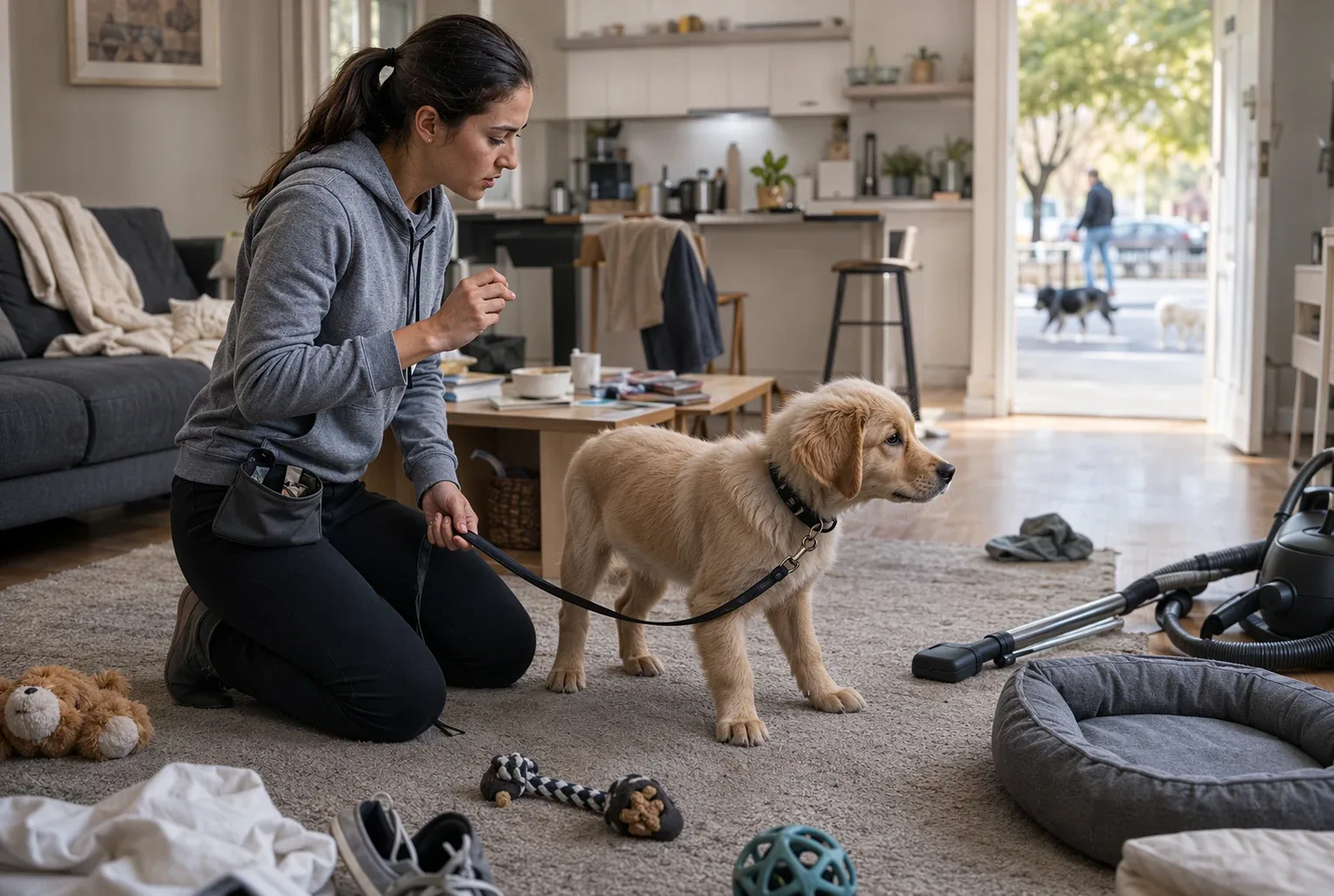
You may still need a mixed plan. The AKC also explains that dogs often do better at home because the space is familiar and low stress, not because the skill is fully learned in new places. A smart setup often includes:
- In-home sessions for house manners
- Field practice in parks, sidewalks, or pet-friendly stores
- Group work for dog and people distractions
If your dog freezes, lunges, or tunes you out outside, ask for a blended plan before you book.

Still unsure which format fits your dog? Hands-On Dog Training helps Chico and Oroville owners choose the right class or in-home plan and get started fast.
Frequently Asked Questions
Q1: What are the key benefits of in-home obedience training versus group classes?
In-home training gives you real-life practice where problems happen, like barking at the door or jumping on guests. It fits your schedule, home setup, and goals better than a class.
Q2: How does in-home dog training improve behavior and strengthen owner-pet bonds?
You learn how to reward, time cues, and stay consistent in daily moments. That builds trust fast. Your dog understands you better, and you feel more confident handling behavior at home.
Q3: What drawbacks should pet owners consider when choosing in-home obedience classes?
Private training costs more and gives less built-in dog-to-dog exposure. Progress can also stall if your dog only listens at home and never practices around other people, dogs, or distractions.
Conclusion
Choose based on where the problem happens and how your dog handles distractions. Private in-home training fits household issues and reactivity. Group classes fit social, stable dogs. A hybrid approach often works best.