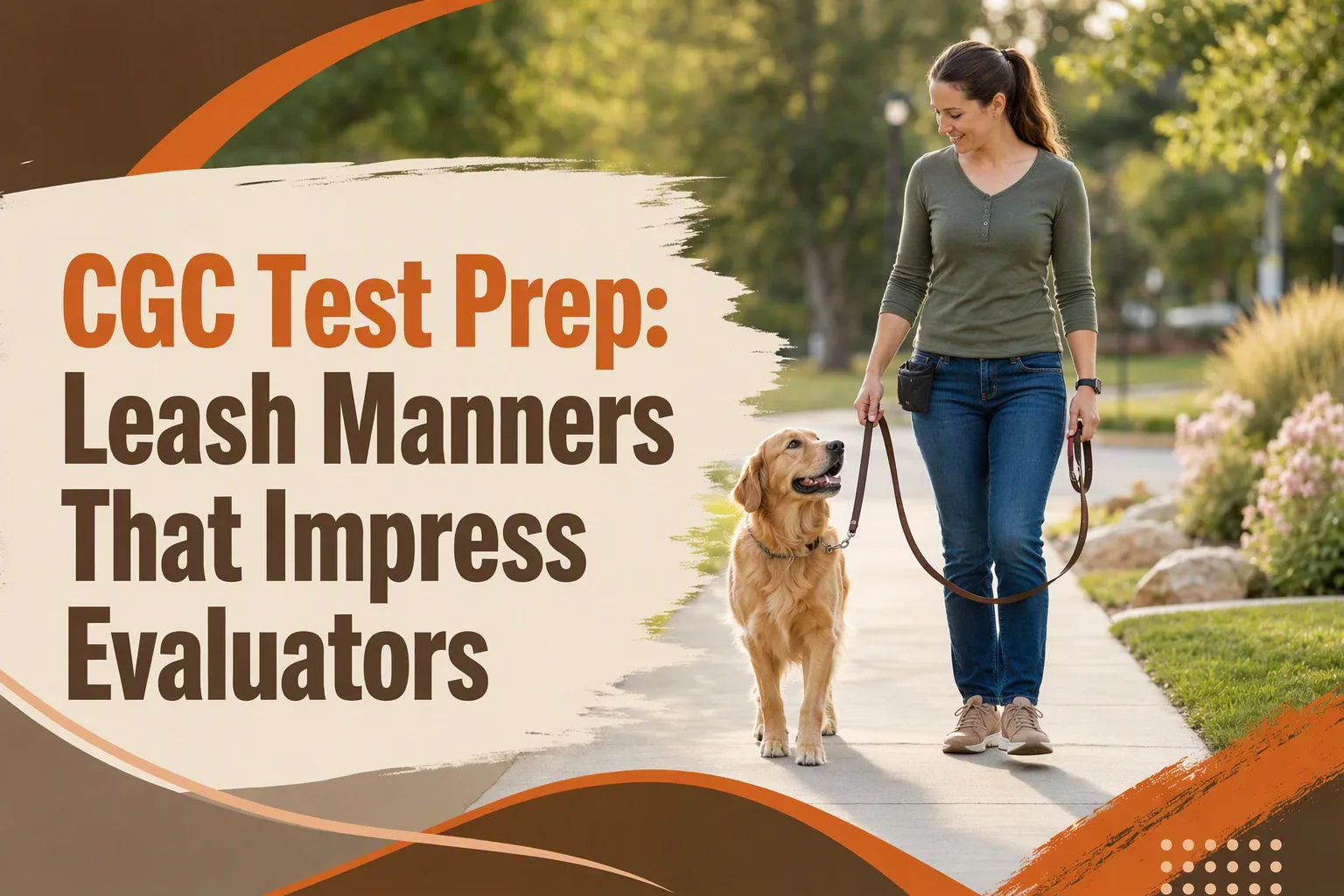
CGC Test Prep: Leash Manners That Impress Evaluators
Quick Summary: To pass the CGC test, dogs need to walk politely on a loose leash through turns, stops, and distractions. Training should focus on building a relaxed leash, precise pattern practice, and proofing around real people and distractions. Consistent handling and rewarding good behavior help dogs stay attentive and under control during the test.
If your dog pulls on real walks but looks fine indoors, the CGC loose-leash walk will expose it fast. This guide fixes that gap. You will learn the leash manners evaluators watch for, how to clean up turns and stops, and how to build leash manners around real distractions. I’m focusing on test-specific leash manners here, with practical handling tips that match what CGC evaluators expect on test day and in approved AKC settings.
1. Build a loose-leash baseline your dog can actually hold
Start with the standard the evaluator will score. In CGC Test 4, your dog does not need a perfect heel, but should stay attentive through a right turn, left turn, about turn, and stops, according to AKC CGC test items.
Reward the exact position you want
Pick one walking zone first – beside your leg, not drifting ahead. Mark and reward every 1 to 2 steps while the leash is still soft.
- Feed low and at your seam
- Stop rewarding forging
- Practice short reps indoors first
| Goal | What to reward | What to ignore |
|---|---|---|
| Loose leash | Shoulder near your leg | Wide sniffy circles |
| Attention | Check-ins and turns with you | Staring at distractions |
If your dog can only hold 5 good steps, train 5 good steps.
Prevent pulling from becoming a habit
Each tight-leash step rehearses the wrong skill. The AKC evaluator guide allows normal praise, but not food during the test, so train with rewards now and fade them later from the AKC evaluator guide.
- Shorten sessions before your dog falls apart.
- If the leash tightens, stop or turn.
- Reset fast, then reward slack.
Also Read: https://handsondogtraining.com/loose-leash-walking-enjoying-stress-free-walks-in-oroville
2. Practice the CGC walk pattern exactly the way evaluators see it
AKC says the loose-lead walk must include a right turn, left turn, about turn, and stops, and your dog does not need perfect heel position or an automatic sit at halts, only clear attention and response to you in the official CGC test items.
- Shape the turn sequence before adding distractions
- Practice in a quiet space first.
- Walk 6 to 10 steps, cue one turn, then reward after the dog follows without tightening the leash.
- Build this exact pattern:
- right turn
- left turn
- about turn
- stop
- Keep your leash in a soft J-shape.
- If your dog forges, turn sooner. If they lag, shorten the pattern and reward faster.

- Add stops, starts, and pace changes without leash tension
- Once turns are clean, add normal halts and smooth restarts.
- Then mix in slow and brisk stretches so your dog learns to match your body, not just the route.
- Use this checklist:
| Skill | What evaluator wants to see | Common mistake |
|---|---|---|
| Stop | Dog stays with you under control | Tight leash at halt |
| Restart | Dog moves with you promptly | Lunging ahead |
| Pace change | Dog adjusts to your speed | Sniffing or drifting |
Talk to your dog in a normal voice, but do not steer with the leash.
Also Read: https://handsondogtraining.com/the-akc-canine-good-citizen-is-your-dog-ready
3. Proof leash manners around real-world distractions
AKC’s crowd item asks your dog to walk politely past at least three people and stay under control without jumping or straining, according to the official CGC test items. Train that exact picture.
- Start with one calm person
- Add a stroller, jogger, or shopping cart
- Practice narrow passes at safe distance
- Reward check-ins before your dog locks on
Use short reps. Walk past, turn away, reset, repeat. If the leash tightens, you moved too close or stayed too long.
Your goal is not a robot heel. Your goal is a dog that stays with you and can recover fast.
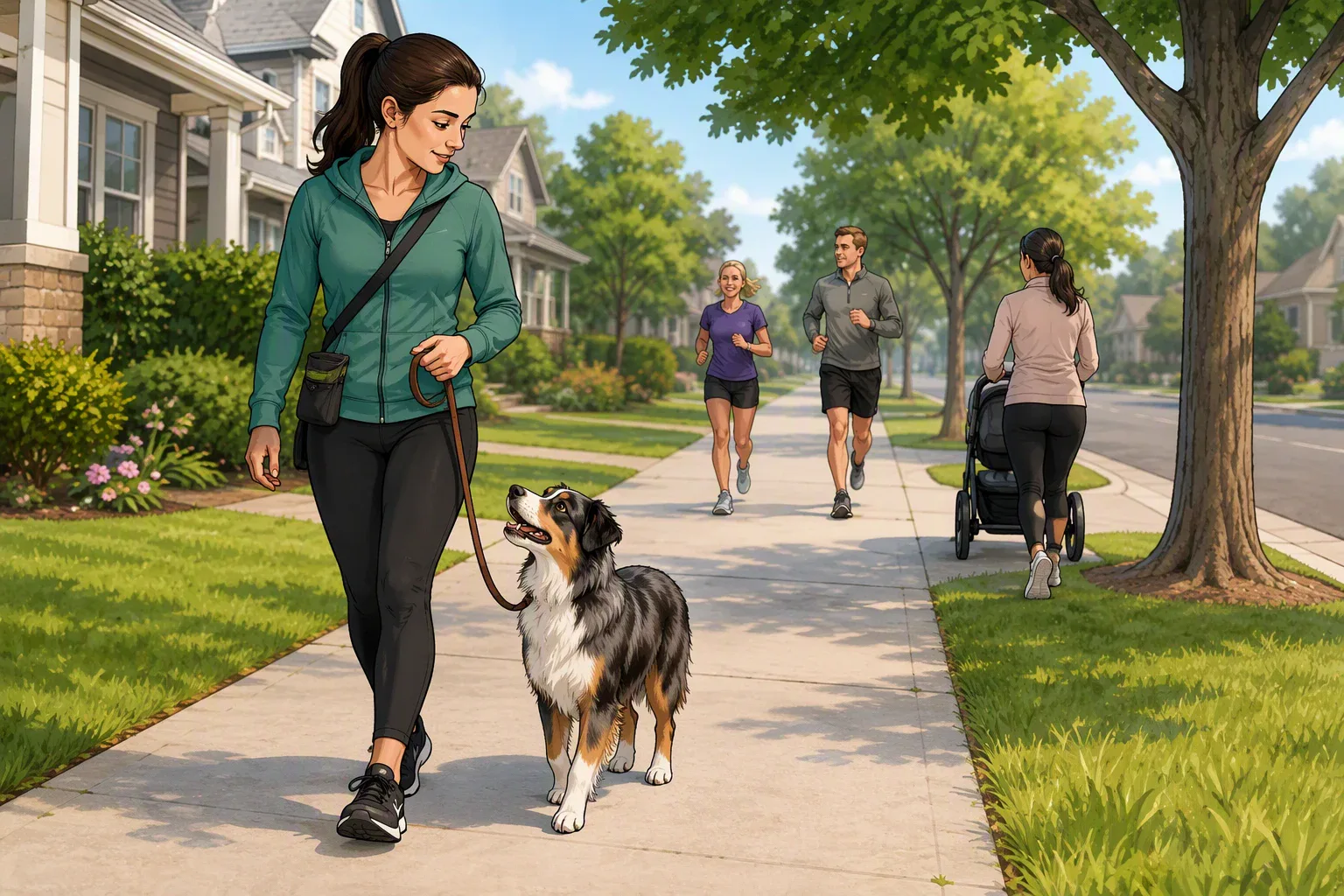
A dog is ready for evaluator-level proofing when the behavior looks boring. The AKC evaluator guide stresses control, confidence, and safety around people and dogs.
Use this quick checklist:
| Ready sign | What it looks like |
|---|---|
| Loose leash | Slack stays in the leash through passes |
| Fast recovery | Dog reorients to you in 1-2 seconds |
| Neutral interest | Looks at people, then moves on |
| Handler control | You can stop, turn, and continue smoothly |
Also Read: https://handsondogtraining.com/deepening-the-bond-the-power-of-positive-reinforcement
Need help polishing loose-lead walking before test day? Hands-On Dog Training offers positive, local coaching to fix pulling, lagging, and distracted turns fast.
Frequently Asked Questions
Q1: Where can I take the CGC test?
Check the AKC Approved CGC Evaluator list, then contact local clubs, trainers, or test hosts. Hands-On Dog Training may also help Chico and Oroville owners find nearby options and prep before test day.
Q2: Can my dog tighten the leash briefly and still pass?
A brief tighten may not fail you, but steady pulling, lagging, or forging can. Evaluators want a dog that follows with you calmly through turns, stops, and normal pace changes.
Q3: Should I practice with treats if treats are not used in the test?
Yes. Use treats in training, then fade them. Reward after short patterns, not during them. This keeps leash work clean while helping your dog stay accurate, relaxed, and focused under test pressure.
Conclusion
Strong CGC leash work is simple: keep the lead loose, handle turns and stops cleanly, and help your dog stay with you through light crowd pressure. AKC says the loose-lead walk includes right, left, and about turns with stops, and approved evaluators and clubs offer testing locations AKC test items AKC testing info.