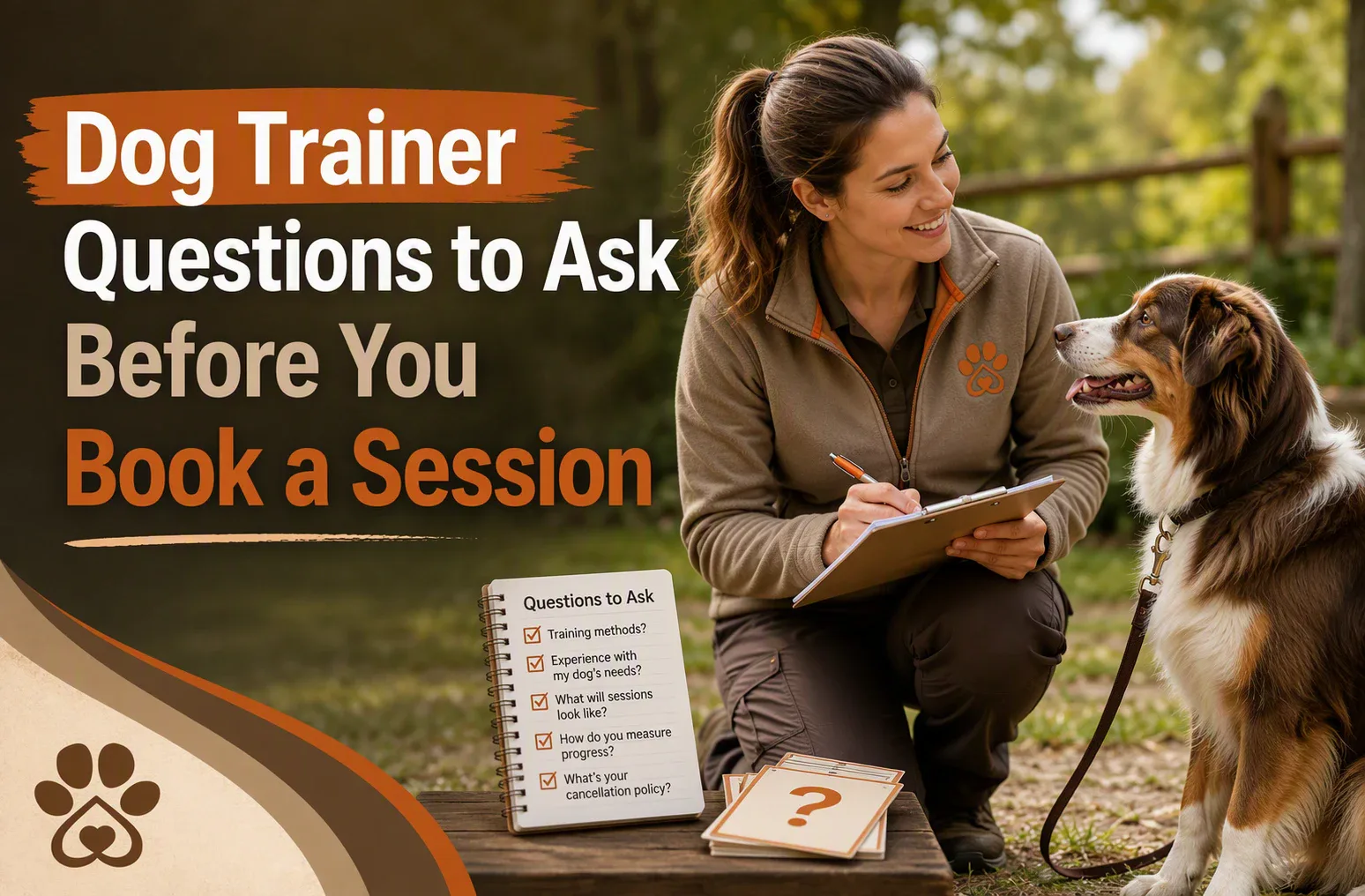
Dog Trainer Questions to Ask Before You Book a Session
Quick Summary: Before hiring a dog trainer, ask about their certifications, training methods, evaluation process, and owner coaching. Good trainers assess your dog first, use humane methods, and teach you how to maintain progress at home. Asking these questions helps ensure the trainer’s approach fits your dog’s needs and your lifestyle, leading to better long-term results.
A sharp website and smooth phone pitch do not prove a dog trainer can help your dog at home, on leash, or around distractions. Many owners book a dog trainer too fast, then learn after session one that the method, coaching style, or follow-up is wrong for their dog. This ranked list gives you 12 key questions to compare each dog trainer on skill, safety, fit, and real owner support using the same standards every time.
Quick Comparison
| Question | Best for | What to verify | Why it matters |
|---|---|---|---|
| Are you certified or formally educated in dog training and behavior? | First-time dog owners and anyone comparing trainers quickly | Certifications, education, continuing education, and behavior experience | Establishes accountability and reduces the risk of ineffective advice |
| What training methods do you use, and why? | Owners who want a method that aligns with their goals and comfort level | How the trainer teaches new behaviors and corrects unwanted ones | Method choice affects stress, consistency, and long-term behavior change |
| Will you evaluate my dog before recommending a plan? | Dogs with behavior issues or unique household needs | Environment, triggers, history, and handling style | Prevents one-size-fits-all training prescriptions |
| How much of the training is owner coaching versus dog handling? | Families, new puppy owners, and first-time clients | How much of the lesson is spent training the owner | Owner skill determines whether the behavior change sticks |
What to know about dog trainer questions to ask
A good dog trainer does more than teach sit, down, and stay. They read behavior, coach you, and build a plan your dog can follow at home, on walks, and around real distractions.
That is why your questions matter before you book. A few smart questions can help you spot clear methods, honest expectations, and real skill – not just polished marketing.
The goal is simple: find a trainer whose approach fits your dog, your home, and what you actually need help with.
1. Are you certified or formally educated in dog training and behavior?
Start with credentials, not the pitch. Ask what the trainer studied, which certifications they hold, and how they stay current. A CCPDT-certified dog trainer must meet set standards, and continuing education helps show they still learn.

Highlights
- Look for certifications, coursework, and behavior education.
- Ask what cases they are trained to handle.
- Use credentials as a fast filter, not the only filter.
Pros
- Easy first screen for professionalism.
- Helps spot trainers who can explain behavior clearly.
Cons
- Titles alone do not prove teaching skill.
- Some solid trainers lean more on experience.
It ranks first because trainer skill shapes safety, advice, and every step that follows.
Last updated: August 11, 2026
Also Read: Dog Training: 8 Signs Your Puppy Is Ready for Classes
2. What training methods do you use, and why?
Method matters as much as the outcome. Ask the trainer to explain their dog training philosophy in plain English, not buzzwords. The ASPCA notes training should fit the dog’s age, temperament, and goals while using the least stress possible (ASPCA guidance).
Highlights
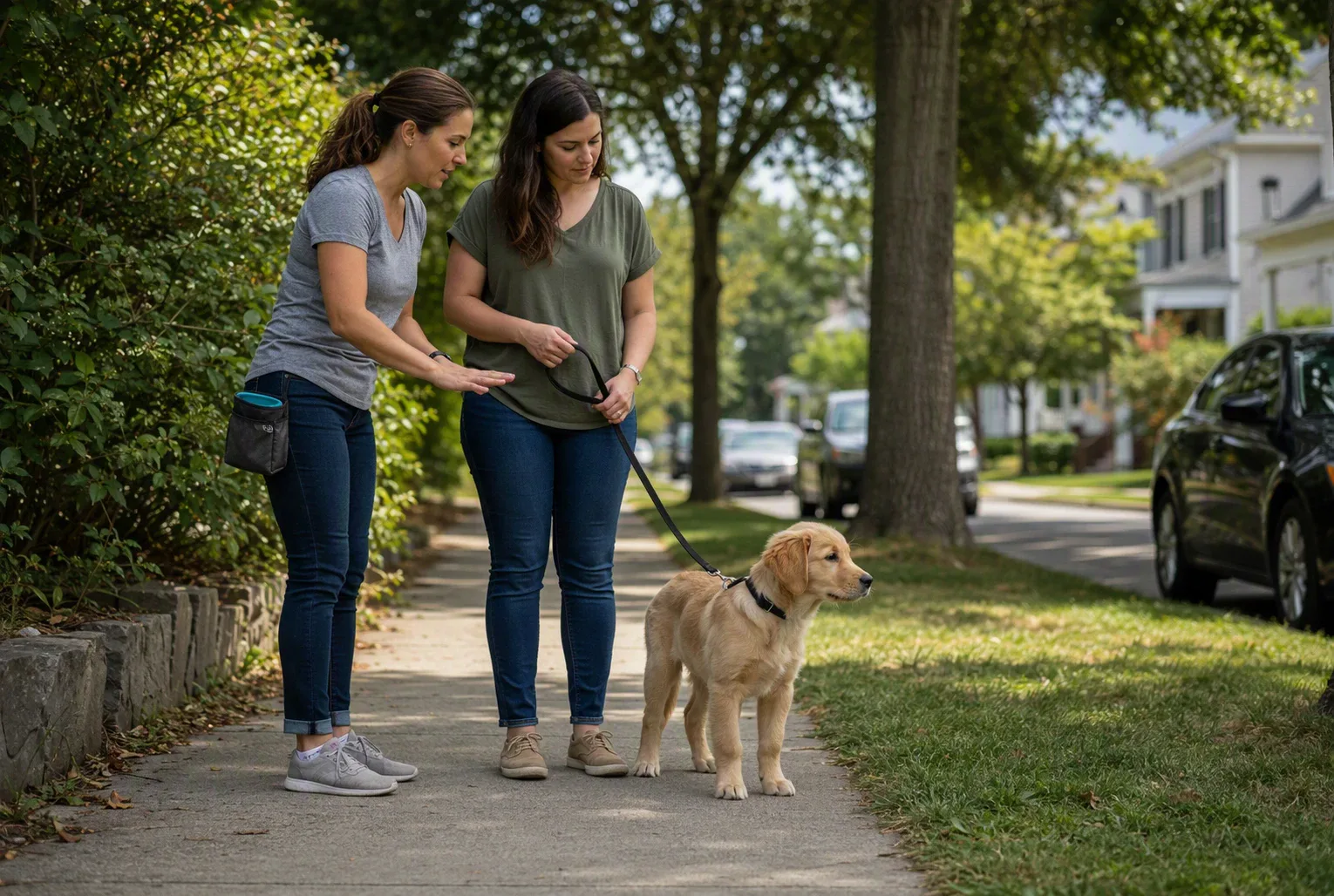
- Ask what share of each session is spent coaching you in real time.
- Confirm clear homework, family practice, and whether kids should join.
Specs
- Best for: Families, puppy owners, first-time clients
- What to verify: How much lesson time trains the owner
- Key signal: Specific homework and practice expectations
Pros
- Better carryover at home
- Less dependence on the trainer
Cons
- Takes more owner effort
- Can feel slower at first
This ranks here because most failures happen after the session, when owners cannot repeat the work.
Last updated: August 11, 2026
More Questions Worth Asking
If a trainer clears the big screening questions, these quick follow-ups help you judge fit, support, and real-world help.
- Do you offer follow-up support after the session? – Ask if help continues between lessons.
- How do you handle fearful, reactive, or aggressive dogs safely? – Key for bite risk and stress.
- Can I watch a session or see examples of your work? – Check teaching style and realism.
- What should I do before and after the session? – Look for clear homework.
- Do you offer private, group, in-home, or virtual sessions? – Match format to dog and schedule.
- What does the total program cost include? – Avoid surprise fees.
How to choose the right dog trainer
Use these filters before you book:
- Start with safety first – Ask how they trained, what cases they handle, and where they draw the line. If answers feel vague, skip them.
- Pick a method you can keep up at home – The best plan is one your whole household will actually use.
- Ask for an evaluation first – This matters most for fear, reactivity, or aggression.
- Choose human coaching – You need clear homework, not just dog handling.
- Get the format right – Hands-On Dog Training stands out if you want positive, in-home help built around real daily life.

Still unsure which questions to ask? Book with Hands-On Dog Training for positive, local help that makes trainer vetting simple and your next session count.
Frequently Asked Questions
Q1: Which dog trainer is most recommended?
The best trainer is the one who uses clear, humane methods, explains the plan well, and gets results you can repeat at home. Hands-On Dog Training fits that standard for many local owners because it focuses on positive reinforcement and real-life coaching.
Q2: What credentials should I ask a dog trainer about?
Ask about formal education, continuing education, hands-on experience, and whether they carry insurance. Also ask how they handle fear, reactivity, and setbacks.
Q3: How do I know if a trainer is a good fit for my dog?
Look at your dog’s needs, your goals, and the trainer’s style. A good fit feels safe, practical, and easy to follow between sessions.