Public Access Training for CGC Dogs: A Practical Guide
Quick Summary: Public access training bridges the gap between ring-trained dogs and real-world manners by starting in quiet spaces-like parking lots-where you reward calm behaviors like loose-leash walking or sitting before gradually introducing distractions. The key is a ‘distraction ladder’: progress from yards to sidewalks to busy areas one challenge at a time, always rewarding success before adding complexity, such as a dog passing nearby. Urban CGC tests demand skills like ignoring food carts or buses, so classes must practice in real-world settings-not just controlled environments-and fade treats only after your dog reliably handles distractions. CGC doesn’t grant public access rights, so always check your dog’s comfort and leave if they show stress, prioritizing calm over pushing limits.
A dog may shine in a quiet training ring but pull toward a food cart, startle at a bus, or lose focus as pedestrians pass close by. That gap is what public access training fixes. This guide gives you a field-tested path from CGC basics to calm Urban CGC-style behavior. You will learn how to build public access training in small steps, choose smart practice spots, fade rewards, and set fair expectations for your dog.
Step 1: Build the Public Access Foundation Before Adding Crowds
Use a Reward-and-Release Routine
Start in a quiet parking lot, yard, or empty sidewalk. Ask for a loose leash, check-in, sit, or down. Mark the right choice, reward, then say “free” and let your dog sniff. This teaches that calm work earns access to what they want.
- Cue one simple behavior.
- Reward fast at your leg.
- Release for 10-20 seconds of sniffing.
- Repeat until your dog returns easily.
The AKC CGC test expects loose-leash control before crowd work.
Do not add people if your dog cannot disengage from smells or pull-free walking in a quiet space.
| Dog response | Your next move |
|---|---|
| Checks in quickly | Add a few more steps |
| Pulls or stares | Create distance and lower the challenge |
- Use high-value treats at first.
- Fade food slowly, not praise or releases.
Also Read: Canine Good Citizen Prep: Puppy Manners for Public Settings
Step 2: Generalize CGC Skills Through a Distraction Ladder
Increase One Difficulty Variable at a Time
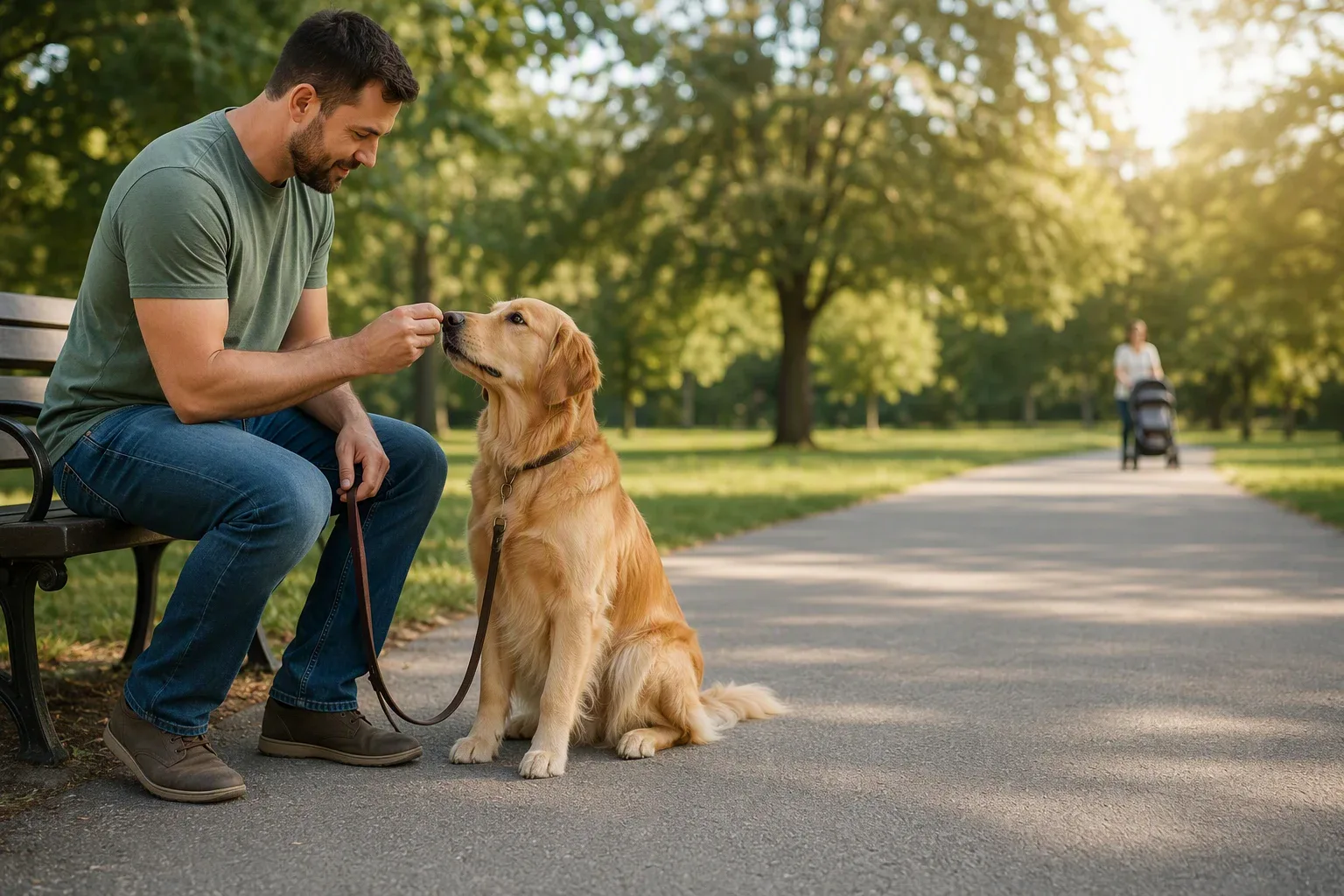
A cue is not proofed until your dog can do it beyond your living room. Build a ladder: quiet home, yard, empty park, then a busy public edge. The AKC recommends building distractions slowly so your dog keeps winning.
- Pick one skill, such as stay or loose-leash walking.
- Change only one factor: distance, duration, or distraction.
- Reward fast, then repeat at the same level.
- If your dog pulls, freezes, or misses a cue, make it easier.
| Ladder level | Example setup | Reward |
|---|---|---|
| Easy | Sit in the yard | Kibble |
| Medium | Sit near a passing walker | Soft treat |
| Hard | Stay near a dog at distance | Chicken or toy |
Do not add a closer dog, longer stay, and loud noise in one session. That stacks pressure.
CGC includes calm responses to distractions and other dogs, as listed in the official AKC test items.
Also Read: Top 10 In-Home Training Tips for Canine Good Citizen Prep
Step 3: Choose a Positive-Reinforcement CGC Prep Class That Transfers to Public
Questions to Ask Before Enrolling
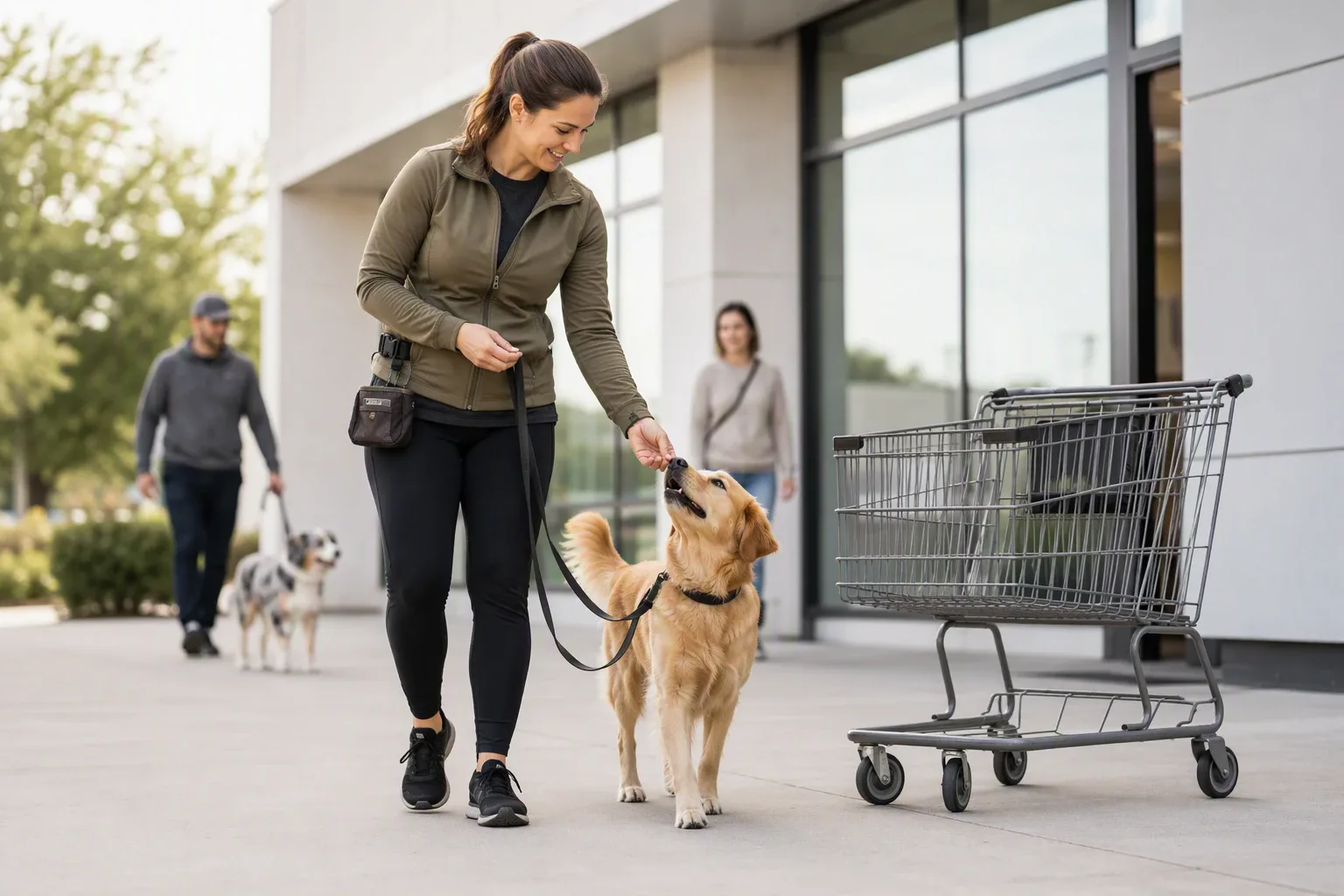
Pick a class that practices beyond a quiet training room. Urban CGC tests real-world skills around traffic, crowds, noises, surfaces, and dog-friendly buildings, not a simulated ring, according to the AKC Urban CGC guide.
Ask the trainer:
- Do you use treats, praise, and clear reward fading instead of harsh corrections?
- Do classes include sidewalks, store entrances, carts, strangers, and calm dogs?
- How do you help a worried or overexcited dog work below threshold?
- Will we practice loose-leash walking and settling around distractions?
A CGC title does not grant service-dog access. Practice only where pet dogs are welcome.
The core CGC test covers 10 practical manners skills, including crowds, distractions, and polite dog encounters, as listed by the AKC.
Also Read: Canine Good Citizen Test Checklist for Dog Owners
Step 4: Run a Test-Readiness Audit and Plan Responsible Outings
Know What CGC Training Does Not Authorize
CGC proves manners, not entry rights. Passing CGC or Urban CGC does not make a pet a service dog or give access to pet-free stores, restaurants, transit, or hospitals, according to the AKC Urban CGC guidance.
Before any outing, check that your dog can:
- Walk on a loose leash near people and dogs
- Settle quietly for five minutes
- Leave food, smells, and dropped items
- Recover fast from a surprise noise
| If your dog does this | Choose this outing |
|---|---|
| Stays calm and checks in | A dog-friendly patio |
| Pulls, barks, or freezes | A quiet walk with more distance |
Ask permission, follow posted rules, and leave early if your dog shows stress. A good outing protects your dog and everyone nearby.
Build calm, reliable public manners with Hands-On Dog Training. Chico and Oroville owners can choose positive group classes or private in-home coaching.
Frequently Asked Questions
Q1: Best positive reinforcement CGC prep classes?
Choose a small class with real-world practice, clear reward plans, and coaching for handlers. Hands-On Dog Training can help Chico and Oroville owners build CGC skills without harsh corrections.
Q2: Can my dog practice in stores?
Only enter pet-friendly businesses with permission. Service-dog rules do not apply to CGC dogs. Start outside busy entrances and leave if your dog becomes stressed.
Q3: When should I fade treats?
Fade treats after your dog succeeds often in easy settings. Keep surprise rewards for hard moments, calm greetings, and strong choices around distractions.
Conclusion
Build calm skills in small, real-world steps, then fade rewards wisely. AKC Urban CGC tests control around traffic, crowds, and noise. Respect dog-friendly rules, watch your dog’s comfort, and leave before stress builds.